

A student loan default can feel like a locked door on your credit future. It is not the end of the story. The right recovery plan helps you fix the loan status, check every bureau for reporting errors, and rebuild positive payment history one month at a time.
Get started with M1 Credit Solutions to review your credit reports and plan your next dispute.
How to build credit after student loan default begins by resolving the delinquency through federal loan rehabilitation or consolidation to restore your standing. Federal loan rehabilitation is beneficial because making nine consecutive payments removes the default notation from your report, according to the U.S. Department of Education. Although this process successfully cleans the default status, your records of previous late payments will still remain on your credit history for seven years. To build a strong score, you must actively dispute credit report inaccuracies and maintain low credit card balances to show responsible habits. Paying every future bill on time is also necessary to establish a positive payment history and secure better terms on future loans.
You might wonder how you can recover your credit rating and rebuild your financial future after a major loan delinquency. Our guide on How to build credit after student loan default will show you the exact steps to improve your scores. To start your recovery, follow this practical sequence.
How to build credit after student loan default
Defaulting on a student loan can feel like a heavy burden. But you can recover from this setback if you take the right steps. Resolving the loan status is only the first layer of the process. True recovery requires you to rebuild payment history, check reports, and use credit carefully.
Does student loan rehabilitation improve your credit score?
Yes, completing student loan rehabilitation can help improve your credit score. When you rehabilitate a federal student loan, the default status is removed from your credit report. You can learn more about this process at StudentAid.gov. But the history of late payments that led to the default will still remain on your report.
Resolving default status and monitoring reports
Federal student loans go into default after 270 days of missed payments. This status causes serious damage to your credit profile. You can check your current loan status on the StudentAid.gov dashboard. Once you resolve the default, you must focus on the rest of your credit report.
Private student loans can enter default much faster than federal loans. A private loan can go into default after just one missed payment. Defaulting on a private loan can also lead to collection fees and potential lawsuits. It is important to know which types of loans you hold so you can act quickly.
Negative credit records can stay on your credit report for up to seven years according to the Consumer Financial Protection Bureau. It is vital to check your reports for errors during this recovery phase. Under federal law, credit reporting companies must follow rules to ensure maximum accuracy. If you find errors, you should dispute them as soon as possible.
Actionable steps to rebuild your credit
To start rebuilding, you must focus on your payment history. Paying all of your bills on time is the single most important factor. Positive payment history on your loans helps build a strong credit score. You can find more details on how student loans affect your credit at the Consumer Financial Protection Bureau.
You can also use credit cards or small loans to help build new, positive history. Keep your credit utilization low to show good habits to lenders. When you manage credit responsibly, your score can improve. Consistency is key when you want to build credit after student loan default.
You do not need to pay expensive agencies to repair your credit. Instead, you can use an affordable DIY platform to manage the process. If you need to dispute student loan errors, an automated tool can save you time. Our team built M1 Credit Solutions as an AI-powered platform to help you manage your financial future.
The platform analyzes your credit files and helps you generate customized dispute letters. It makes fixing your credit simple. Our goal is to make credit repair easy to use for everyone. While no tool can guarantee a specific score increase, using structured tools is a smart way to rebuild credit after student loan default.
What default does when you build credit after student loan default
Direct answer: Student loan default can add missed payments, default status, collection activity, and balance updates to your credit reports. The recovery work is not only getting current. It is also checking whether every bureau reports the account accurately after rehabilitation, consolidation, payoff, or transfer.
A student loan default is not just a loan problem. It becomes a credit report problem too. Your reports may show missed payments, delinquency, default status, collection activity, and balance changes. Each item can shape how lenders view risk.
Federal loan default timing
Federal student loans usually enter default after 270 days without payment. You can confirm the status by logging in to StudentAid.gov and checking the dashboard or the My Aid section. If your loan is in default, the site may show a warning message.
Once default appears, it can affect more than your score. Federal collection tools may include Treasury offset or wage garnishment after the loan stays unresolved. That is why the first goal is to get the loan back into good standing before you focus only on score movement.
What stays after rehabilitation
Rehabilitation can be powerful for federal loans. When you complete the required rehabilitation payments, the default notation should come off your credit report. That does not mean every old mark disappears.
The late payments that happened before default can still remain. Many negative credit records can stay on a report for up to seven years. This is where expectations matter. Rehabilitation may clean the default label, but it does not rewrite the full payment history.
Private loan reporting risks
Private student loans can move faster. Some private lenders may treat a loan as defaulted after one missed payment. The contract controls the timing, so you need to read notices from the lender or servicer.
Private student loan problems may also bring collection accounts, charge-offs, or legal action. Those entries should still be accurate. If the balance, dates, owner, or payment status is wrong, review the account closely and consider a dispute.
To build credit after student loan default, separate two tasks. First, fix the loan status. Second, audit every student loan tradeline for accuracy across all three bureaus. That second step helps you avoid carrying damage that should not be there.
Rehabilitation vs consolidation: which helps credit recovery?
Direct answer: Rehabilitation is often better for credit-report cleanup because a completed federal rehabilitation should remove the default notation. Consolidation can move faster, but it usually does not erase earlier late payments or guarantee every reporting problem is corrected.
Federal student loan borrowers often hear two recovery options: rehabilitation and consolidation. Both can help you get out of default. They do not affect your credit report in the same way. Your best choice depends on timing, payment ability, and what you need corrected on your reports.
How rehabilitation helps
Rehabilitation is usually the stronger credit-report option for federal loans. For Direct Loans and FFEL loans, you generally must make nine voluntary, on-time payments during 10 consecutive months. After completion, the default notation should be removed from your credit report.
That benefit matters if the default label is blocking your recovery. But rehabilitation is not magic. Prior late payments can remain, and the process takes time. You also need to keep making every new payment on schedule.
How consolidation helps
Consolidation can move a federal student loan out of default faster than rehabilitation in many cases. It combines eligible federal loans into a new Direct Consolidation Loan. This can restore access to repayment options sooner.
The tradeoff is credit reporting. Consolidation may resolve the current defaulted loan status, but it may not remove the old default record the same way rehabilitation can. If your main goal is credit report cleanup, compare both paths before you choose.
| Option. | Best for. | Credit report impact. | Tradeoff. |
|---|---|---|---|
| Rehabilitation. | Borrowers who can complete the payment plan. | Can remove the federal default notation after completion. | Takes months and old late payments may remain. |
| Consolidation. | Borrowers who need a faster route out of default. | Can get the loan current, but old default history may remain. | May not deliver the same reporting benefit as rehabilitation. |
| Payoff or settlement. | Borrowers with funds to resolve the balance. | May update the balance and status. | Does not automatically remove accurate late payment history. |
How to choose your path
Ask what you need most. If you need to stop collection activity and regain federal repayment options, consolidation may fit. If you can handle the required payment schedule and want the default notation removed, rehabilitation may be better.
Before you decide, save every servicer notice. Also pull your credit reports before and after the process. Those records help you spot whether the bureaus update your accounts correctly.
A step-by-step recovery sequence after default
Direct answer: Confirm your loan status first. Then choose rehabilitation or consolidation, save records, pull all three credit reports, dispute inaccurate reporting, and rebuild with on-time payments and low balances.
Credit recovery works best when you follow a clear order. Do not start by chasing quick score changes. Start by fixing the loan status, then clean up reporting errors, then build new positive history.
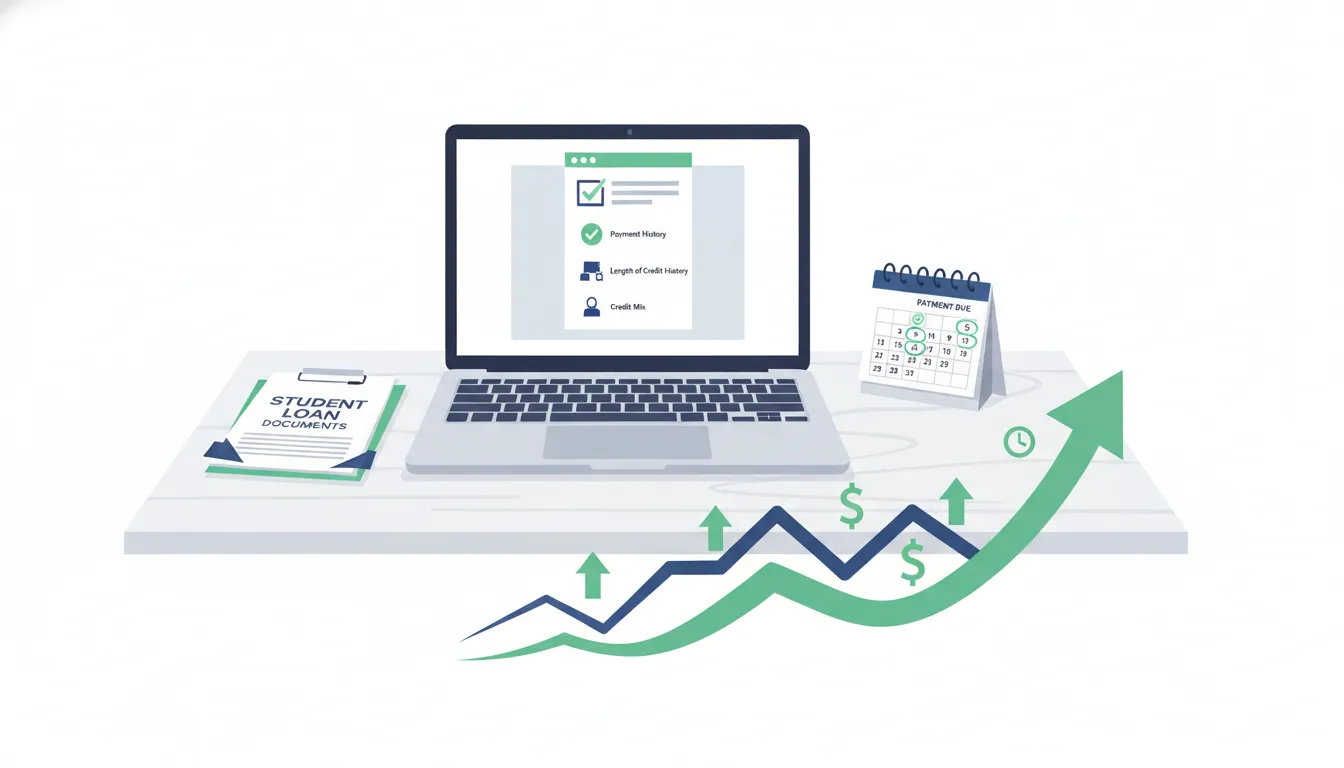
The recovery order
- Confirm your loan status. Log in to StudentAid.gov for federal loans. For private loans, check the servicer account and recent notices.
- List every loan and servicer. Write down the lender, balance, account number, status, and last reported payment date.
- Choose a default resolution path. Review rehabilitation, consolidation, repayment, or payoff options based on your loan type.
- Complete the required action. Make each required payment on time. Save receipts, letters, and screenshots.
- Pull all three credit reports. Review Equifax, Experian, and TransUnion because each bureau may show different student loan data.
- Compare the reports against your proof. Look for wrong balances, duplicate loans, old servicers still showing active debt, or a default status that should be updated.
- Dispute inaccurate information and build new history. Challenge real errors, then keep every open account paid on time.
Why report checks matter
Student loans often transfer between servicers. That can create duplicate tradelines or confusing account labels. A transferred account may be correct, but it should not show a live balance if the debt moved elsewhere.
Check dates carefully. A wrong delinquency date can make damage look newer than it is. A wrong balance can make your debt load look higher. A wrong status after rehabilitation can keep the default label on your profile longer than it should be there.
Where M1 fits into the process
M1 Credit Solutions is built for people who want a structured DIY path. The platform helps users review credit report data and create dispute letters when information appears inaccurate. That can save time when you are comparing several student loan accounts across three bureaus.
Use the tool with realistic expectations. Accurate negative history may remain. Inaccurate reporting should be challenged. This approach gives you control without depending on vague promises.
When should you dispute student loan reporting errors?
Direct answer: Dispute student loan reporting when the balance, account status, delinquency dates, ownership, duplicate tradelines, or post-rehabilitation updates are wrong. Do not dispute accurate negative history just because it hurts your score.
When you fall behind on student loans, your credit score suffers. But you still have the right to an accurate credit report. Federal law requires credit bureaus to ensure maximum accuracy on your report (Consumer Financial Protection Bureau). If you find mistakes, you should challenge them. Cleaning up these errors is a key step if you want to rebuild credit after student loan default.
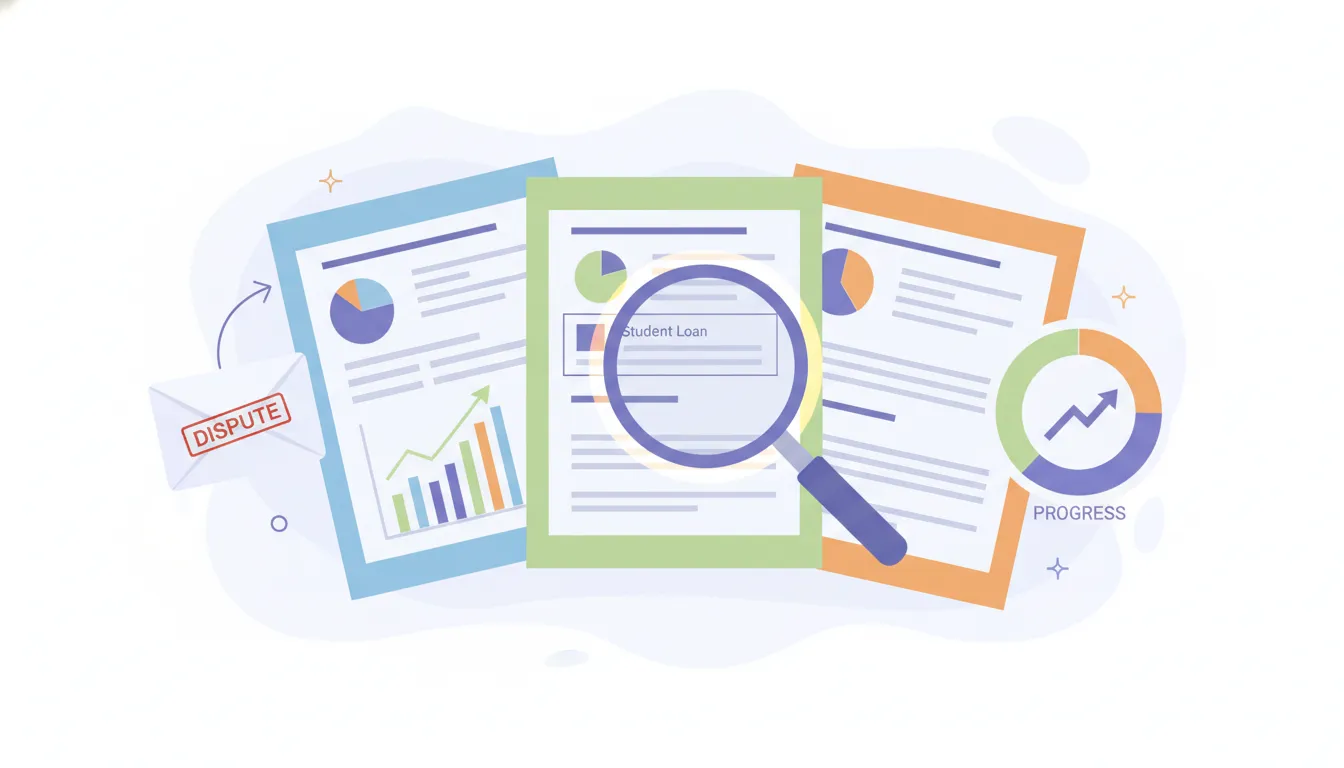
Common data mistakes after loan default
Many lenders report incorrect details to credit bureaus. Your payment history is a major part of your overall rating (Consumer Financial Protection Bureau). Mistakes in these records can harm your score. When you review your credit report, look for these common errors:
- Incorrect loan balances: The reported balance is higher or lower than what you actually owe.
- Duplicate accounts: The same student loan is listed multiple times under different names.
- Wrong payment status: Payments you made on time are marked as late or delinquent.
- Inaccurate dates: The report shows incorrect dates for when the account was opened, closed, or defaulted.
Another error involves loans that do not belong to you. Identity theft or mixed files can cause this mistake. You should also check the status of transferred or closed loans. When a lender transfers your loan to a new servicer, the old account must show a zero balance. It should be marked as closed. If the old account still shows an active balance, it ruins your credit. You must file a dispute to clear these inactive records.
Reporting errors following loan rehabilitation
Federal student loan rehabilitation is a common way to resolve default. The process requires you to make nine on-time payments within ten consecutive months (U.S. Department of Education). You will sign a rehabilitation agreement with your loan servicer. Once you finish, the government removes the default status from your loan. The default notation must also come off your credit report. This change helps you build a better financial future.
But the credit bureaus do not always update their files on time. If your default status remains after rehabilitation, you have a major reporting error. You should dispute this mistake immediately. Keep in mind that rehabilitation only removes the default note. Under federal rules, late payment history stays on your report for seven years (Consumer Financial Protection Bureau). These old late marks will remain. But the actual default status must come off your report.
Your options for fixing credit report mistakes
You do not have to hire an expensive agency to fix these issues. You can use DIY credit repair to audit your credit file and submit your own disputes. This process gives you full control. To make it easier, you can dispute student loan errors using online templates. You can also use advanced technology to simplify the task. For instance, M1 Credit Solutions offers an AI-powered platform to generate your dispute letters. Taking action is the best way to clean your report. It helps you rebuild your financial life.
How to rebuild positive payment history after the loan is current
Direct answer: After the loan is current, make every payment on time and keep revolving balances low. Avoid unnecessary new applications, and review reports monthly so new errors do not undo your progress.
Once the default is resolved, your next job is consistency. Credit reports reward patterns. One month of good behavior helps, but a long run of on-time payments sends a stronger signal.
Payment history
Set every student loan payment, credit card payment, and utility bill on a calendar. If automatic payments are available, use them only when you know the money will be in the account. A new missed payment can slow your recovery.
Keep a small emergency buffer if possible. Many people miss payments because the due date arrives before payday. Moving due dates or setting reminders can prevent that problem.
Credit utilization
Revolving balances matter too. If you have credit cards, try to keep balances low compared with limits. Paying down high balances can help your profile look less risky.
If you do not have an open card, a secured card or credit-builder account may help. Choose low fees and simple terms. Do not open several accounts at once. Too many applications can add pressure while you are rebuilding.
Good credit habits
Build one repeatable routine. Review your accounts weekly. Pay before the due date. Keep balances low. Save records when a student loan servicer changes or updates your account.
M1 Credit Solutions has related guides on how to build credit from scratch and create good credit habits. Use those basics after your student loan is current. The goal is not a one-time fix. The goal is a cleaner report and a stronger pattern over time.
Common mistakes that slow recovery
Most recovery mistakes come from rushing. Student loan default creates stress, so quick fixes can sound tempting. A safer plan is slower, clearer, and based on proof.
Assuming everything disappears
Rehabilitation can remove the federal default notation after completion. It does not remove every late payment that came before the default. If you expect a clean report overnight, you may feel stuck even when progress is real.
Use your reports to separate accurate history from errors. Accurate negative items may remain. Wrong balances, wrong dates, duplicate accounts, or a default status that should have been updated deserve a closer look.
Ignoring all three bureaus
Do not review only one credit report. Equifax, Experian, and TransUnion may not match. A loan can be correct on one report and wrong on another.
Check each bureau before and after rehabilitation, consolidation, or payoff. Save copies. If you need to dispute, your documents will show what changed and what still needs attention.
Chasing quick promises
Avoid any claim that sounds guaranteed. No credit repair company can promise a specific score increase or a guaranteed deletion of accurate information. Real credit repair focuses on accuracy, documentation, and better habits.
You can use DIY credit repair tools to stay organized. The smart move is to dispute only information you believe is wrong. Then support the dispute with documents from your servicer, StudentAid.gov, and your credit reports.
Frequently Asked Questions
How do I know if my loans are in default?
According to the U.S. Department of Education, federal student loans typically enter default after 270 days of non-payment. To check your status, log in to your StudentAid.gov dashboard. A warning message will appear in a red box if your loan is in default. You can also view status details in the My Aid section. In contrast, private student loans can enter default much faster, sometimes after just a single missed payment depending on your lender’s policy.
What is the difference between having loans in default vs. in collections?
Default is a status that occurs when you fail to make your payments on time. For federal student loans, default typically happens after 270 days of non-payment. In contrast, collections are the active recovery actions taken by lenders to recoup the money. According to the U.S. Department of Education, the government can initiate involuntary collection methods after 360 days of non-payment. These aggressive measures include withholding up to 15% of your paycheck through wage garnishment.
Can I remove default status from my credit report?
Yes, you can resolve a federal default through a student loan rehabilitation program. According to Federal Student Aid, completing rehabilitation removes the default notation from your credit report. However, this process does not erase the history of late payments leading up to the default. Under federal guidelines, those negative payment marks can remain on your credit history for up to seven years. You can also use specialized software to audit your reports and dispute student loan errors that may linger.
Will paying off defaulted student loans increase my credit score?
Paying off the debt stops active collections and prevents further credit damage, but it does not immediately delete past negative history. To see a significant score increase, you must focus on positive behaviors. According to the Consumer Financial Protection Bureau, establishing a consistent record of on-time payments is the most effective way to improve your rating. This constructive behavior will help you build credit after student loan default over time.
Start reviewing your student loan credit report today
You can rebuild after student loan default, but you need a clear process. Start with your loan status, then review every student loan tradeline for accuracy. If something looks wrong, document it before you dispute.
M1 Credit Solutions gives you an affordable DIY way to review credit report data and create dispute letters for inaccurate items. Start reviewing your credit reports with M1 Credit Solutions and take the next step toward a cleaner, more organized credit profile.