
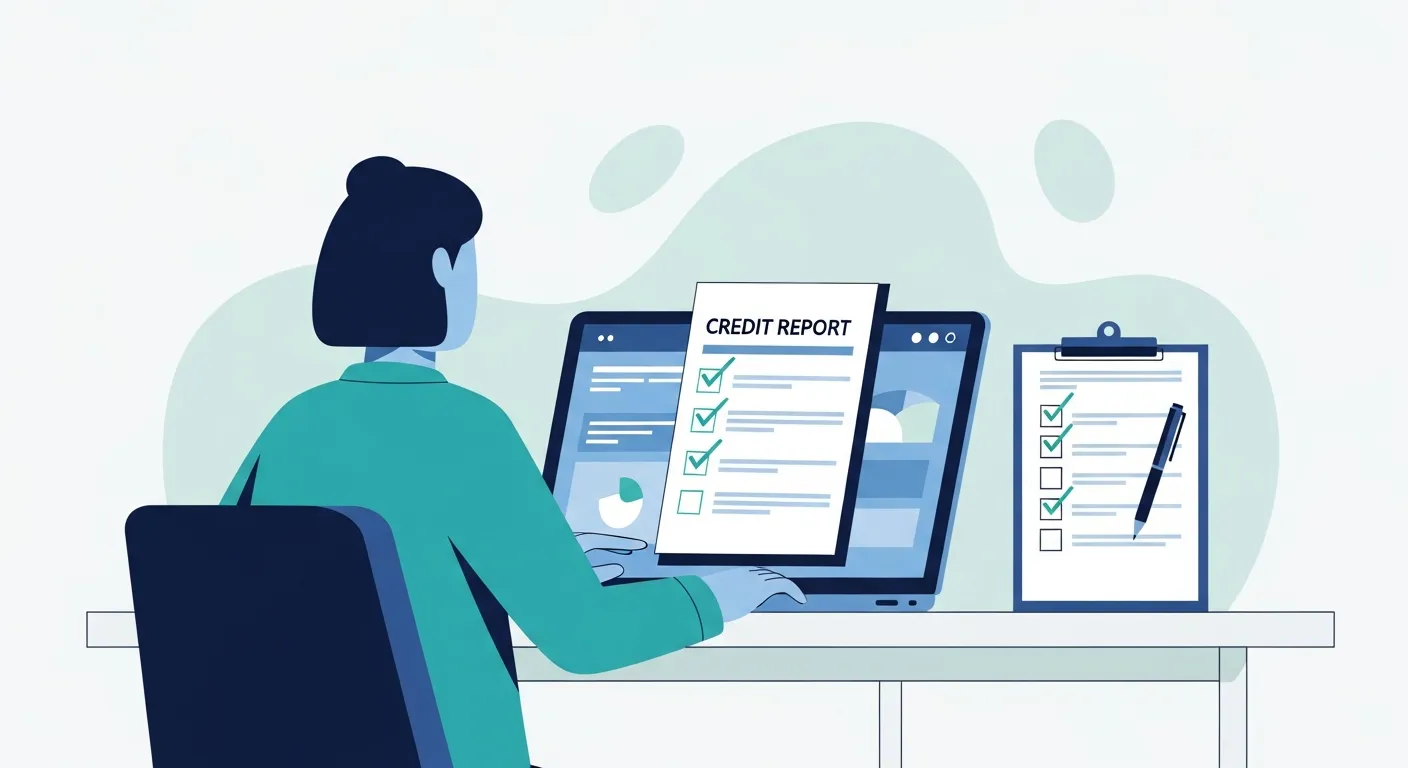
A collection account on your credit report can drop your score by 100 points or
more, making it harder to qualify for loans, credit cards, and even rental
housing. The good news: you have legal rights that allow you to challenge,
negotiate, and in many cases remove these accounts entirely. This guide walks
you through every proven strategy to remove collections from your credit report,
from verifying the debt is valid to filing disputes, negotiating pay-for-delete
agreements, and knowing when the clock runs out on old debts.
If you also need to clean up other negative items like unauthorized credit checks, learn how to remove hard inquiries fast.
What Is a Collection Account and Why Does It Hurt Your Credit?
When you fall behind on a bill, such as a credit card payment, medical expense,
or utility bill, the original creditor may eventually sell or assign that debt
to a third-party collection agency. Once that happens, a new tradeline labeled
as a “collection account” appears on your credit report alongside the original
delinquent account.
This matters because payment history makes up roughly 35% of your FICO score. A
collection account signals to lenders that you failed to meet a financial
obligation, which makes you a riskier borrower. Here is what you need to know:
- Score impact is immediate. A single collection can reduce your credit score by 50 to 100+ points, depending on your starting score and overall credit profile.
- Collections stay for seven years. The clock starts from the date of first delinquency on the original account, not from the date the debt was sold to a collection agency.
- Newer collections hurt more. A five-month-old collection has a much bigger impact on your score than one that is five years old. The effect gradually fades over time.
- Paying alone does not remove it. A paid collection updates to “paid in full” but the tradeline itself can remain on your report for the full seven years under most older scoring models like FICO 8.
Understanding these mechanics is the first step. Now let’s walk through exactly
how to remove collections from your credit report using proven, legal
strategies.
Step 1: Pull Your Credit Reports and Verify the Collection Is Valid
Before you take any action, you need a clear picture of what is being reported.
Start by pulling your credit reports from all three major bureaus: Equifax,
Experian, and TransUnion. You can do this for free at AnnualCreditReport.com.
Once you have your reports, look at each collection account carefully and
document:
- The name of the collection agency and the original creditor
- The balance owed and the original debt amount
- The date of first delinquency (this determines when the account must fall off)
- Whether the account appears on one, two, or all three reports (bureaus do not always have identical information)
Cross-reference these details with your own records. Do you recognize the debt? The same careful review process applies when checking for unauthorized hard inquiries on your credit report.
Is the amount correct? Does the timeline make sense? Any discrepancy, no matter
how small, gives you grounds for a dispute.
Using a platform like M1 Credit Solutions can
streamline this process. The platform connects to all three credit bureaus,
automatically scans your reports for negative items including collections, and
flags potential errors so you know exactly what to challenge.
Step 2: Request Debt Validation From the Collection Agency
Just because a collector says you owe money does not mean the debt is valid.
Under the Fair Debt Collection Practices Act (FDCPA), you have the legal right
to demand proof. This process is called debt validation, and it is one of your
most powerful tools.
How Debt Validation Works
Within five days of first contacting you, a collector must send a written notice
that includes the amount of the debt, the name of the original creditor, and a
statement that you have 30 days to dispute the debt. If you send a written debt
validation request within that 30-day window, the collector must stop all
collection activity until they provide verification.
What to Include in Your Debt Validation Letter
Your debt validation letter should request:
- Proof that the debt belongs to you, including the original signed agreement
- The full payment history showing the original balance and any fees or interest added
- Verification that the collection agency has the legal authority to collect the debt
- The name and address of the original creditor
If the collector cannot validate the debt with proper documentation, they are
legally required to stop collecting and remove the account from your credit
report. This single step removes collections more often than people realize,
especially with older debts where paperwork has been lost during multiple
resales between agencies.
Writing an Effective Letter
Drafting a debt validation letter that cites the correct statutes and covers all
required elements can be tricky. M1 Credit Solutions’ AI-powered dispute letter
generator creates customized validation letters based on your specific
situation, citing the FDCPA and FCRA provisions that apply to your case. This
saves time and ensures your letter meets legal standards.
Step 3: Dispute Inaccurate Collections With the Credit Bureaus
If you find any errors in how the collection is reported, or if the collector
fails to validate the debt, your next move is to file a formal dispute with each
credit bureau reporting the account. The Fair Credit Reporting Act (FCRA) gives
you the right to challenge any information on your credit report that is
inaccurate, incomplete, or unverifiable. M1’s AI-powered credit repair platform can help you review collection details and prepare disputes when information on your credit report is inaccurate.
Common Errors Worth Disputing
Collection accounts are frequently reported with mistakes. Look for:
- Wrong balance or amount owed compared to what you actually owe or paid
- Incorrect dates , especially the date of first delinquency (which can illegally extend the reporting period)
- Wrong creditor name or account number
- Duplicate entries where the same debt appears twice, once under the original creditor and again under the collector
- Debts that are not yours due to identity theft or mixed credit files
- Accounts older than seven years that should have been removed already
How to File Your Dispute
File a separate dispute with each bureau reporting the error: Equifax, Experian,
and TransUnion. The bureaus do not share dispute information with each other, so
you must contact all three independently. You can file disputes online, by mail,
or by phone, though written disputes sent via certified mail create the
strongest paper trail.
In your dispute, be clear and factual. State exactly which item you are
disputing, explain why the information is inaccurate, and include copies of any
supporting documents such as payment receipts, bank statements, or
correspondence with the collector.
After receiving your dispute, the bureau has 30 to 45 days to investigate. They
will contact the collection agency to verify the information. If the agency
cannot verify the account, the bureau must remove or correct it.
If you want to clean up your credit
report efficiently,
M1’s AI platform can identify disputable items across all three reports and
generate bureau-specific dispute letters tailored to each error, saving you
hours of manual work.
Step 4: Negotiate a Pay-for-Delete Agreement
If the collection is valid and accurately reported, disputing it may not work.
In that case, a pay-for-delete agreement is your next strategy. This is a
negotiation where you offer to pay the debt (often at a reduced amount) in
exchange for the collector agreeing to completely remove the account from your
credit report. See our complete guide to writing a pay for delete letter, including a free template you can use right away.
How to Negotiate Pay-for-Delete
Follow these steps for the best chance of success:
Contact the collection agency in writing. Do not negotiate over the phone
without documentation. A written pay-for-delete
letter
establishes a clear record.
Start with a lower offer. You do not have to pay the full balance. Begin by
offering 25% to 50% of the total amount owed. Many agencies will negotiate,
especially on older debts they purchased for pennies on the dollar.
Get the agreement in writing before you pay. This is non-negotiable. A
verbal promise has no enforcement power. You need a signed letter from the
collection agency that explicitly states they will request deletion of the
account from all three credit bureaus once payment is received.
Pay with a traceable method. Use a money order, cashier’s check, or bank
transfer. Avoid giving the collector direct access to your bank account.
Follow up after payment. Check your credit reports 30 to 60 days after
payment to confirm the account has been removed. If it has not, file a dispute
with the credit bureaus and include a copy of the pay-for-delete agreement.
Know the Limitations
Not all collectors will agree to pay-for-delete. Some agencies have internal
policies against it, and the credit bureaus officially discourage the practice
because it can make credit reports less accurate. However, many smaller agencies
and debt buyers do accept these offers, so it is always worth trying.
Important warning: Be cautious with debts that are close to the seven-year
reporting limit. In some states, making a payment on an old debt can restart the
statute of limitations for legal action, even though it does not restart the
seven-year credit reporting clock. Know your state’s rules before paying.
Step 5: Send a Goodwill Letter for Paid Collections
If you have already paid a collection account, either in full or as a
settlement, and it is still showing on your credit report, a goodwill letter may
help. This is a polite, written request to the collection agency or original
creditor asking them to remove the negative mark as a gesture of goodwill.
When Goodwill Letters Work Best
This approach tends to succeed when:
- You have an otherwise strong payment history and the collection was an isolated incident
- You can explain the circumstances that led to the missed payments (job loss, medical emergency, divorce)
- The amount was relatively small
- You have been a good customer since resolving the debt
What to Include
In your goodwill letter:
- Acknowledge the debt and that it has been paid
- Briefly explain the circumstances that caused the financial hardship
- Emphasize your positive financial behavior since that time
- Politely request that they consider removing the account from your credit report
- Express gratitude for their consideration
Keep the tone respectful and concise. You are not disputing the accuracy of the
account; you are asking for a favor. There is no legal obligation for them to
comply, but many creditors will honor a well-written request, especially from
someone who has demonstrated responsible financial behavior.
Step 6: Know the Statute of Limitations on Your Debt
Every debt has a statute of limitations, which is the window of time during
which a collector can legally sue you to recover the money. This is separate
from the seven-year credit reporting period and varies by state, typically
ranging from three to six years, though some states allow up to ten.
Why This Matters
- If the statute has expired , the debt is considered “time-barred.” The collector can still try to contact you, but they cannot take you to court. In some states, even threatening to sue on a time-barred debt is illegal.
- Making a payment can restart the clock. In many states, any payment or even a written acknowledgment of the debt can reset the statute of limitations. This is why you should never pay or confirm a debt without understanding your state’s rules first.
- The statute of limitations does not affect credit reporting. Even if the statute has expired, the collection can still appear on your credit report for the full seven-year period from the date of first delinquency.
Before engaging with a collector, research your state’s statute of limitations
for the type of debt you owe. If the statute has expired, you may be better off
simply waiting for the account to age off your credit report rather than making
a payment that could reactivate legal exposure.
Step 7: Wait for Collections to Fall Off Naturally
If none of the above strategies fully resolve the situation, time is still on
your side. Under the FCRA, most collection accounts must be removed from your
credit report seven years after the date of first delinquency on the original
account.
Key Points About the Seven-Year Clock
- The clock starts from the original missed payment , not when the debt was sold to a collector or when a new collector took over the account.
- Paying the debt does not reset this clock. The seven-year reporting period is based on the original delinquency date, regardless of subsequent payments or activity.
- It does not always fall off automatically. While it should be removed after seven years, errors happen. Monitor your credit reports and dispute any collection that remains past the seven-year mark.
- Newer scoring models help. FICO 9, FICO 10, VantageScore 3.0, and VantageScore 4.0 either ignore paid collections entirely or reduce their impact significantly.
While waiting seven years is not ideal, knowing that the impact of a collection
decreases steadily over time can provide peace of mind, especially if the
account is already several years old.
How M1 Credit Solutions Helps You Remove Collections Faster
Managing the collection removal process across three credit bureaus, multiple
collectors, and various strategies can be overwhelming when done manually. M1
Credit Solutions’ AI-powered DIY credit repair
platform was built to
simplify every step of this process:
- Automatic credit report analysis: Connect your reports from all three bureaus and the platform identifies every negative item, including collections, with potential errors flagged instantly.
- AI-generated dispute letters: Instead of writing letters from scratch, the AI creates customized dispute letters, debt validation requests, pay-for-delete letters, and goodwill letters based on your specific accounts and circumstances. Each letter cites the relevant federal statutes (FDCPA, FCRA) and is tailored to your situation.
- Progress tracking dashboard: Monitor every dispute, track bureau responses, and see your credit score improvements in real time from a single dashboard.
- Step-by-step guidance: The platform walks you through each strategy in this guide, telling you exactly what to do next based on the type and status of each collection account.
Whether you have one collection or ten, M1 gives you the tools to take control
of your credit without hiring an expensive credit repair agency. You do the
work; the AI handles the complexity.
Frequently Asked Questions
Does paying a collection remove it from my credit report?
Not automatically. When you pay a collection, its status updates to “paid in
full” or “settled,” but the tradeline typically remains on your report for up to
seven years. To get it fully removed, you would need to negotiate a pay-for-
delete agreement before making payment or send a goodwill letter after paying.
Newer scoring models like FICO 9 and VantageScore 3.0+ do ignore paid
collections, but many lenders still use FICO 8, which counts them.
How long does it take to remove a collection from a credit report?
It depends on the method. Credit bureau disputes take 30 to 45 days for
investigation. Pay-for-delete agreements typically result in removal within 30
to 60 days after payment. Goodwill letters can take two to eight weeks for a
response. If none of these work, collections automatically fall off after seven
years from the date of first delinquency.
Can I remove a collection myself without hiring a credit repair company?
Yes, absolutely. The FCRA guarantees your right to dispute any inaccurate
information on your credit report at no cost. You can file disputes directly
with each credit bureau and send debt validation letters to collectors on your
own. Platforms like M1 Credit Solutions make the DIY credit
repair process faster by
automating letter generation and tracking, but you are fully empowered to manage
it yourself.
What if the collection is from a charge-off?
A charge-off means the original creditor wrote off the debt as a loss, but the
debt may still be sold to a collector. You can still dispute inaccuracies,
negotiate pay-for-delete, or send goodwill letters. The strategies are the same.
For a detailed walkthrough, see our guide on how to remove a charge-off from
your credit report.
Also important to know: how long a charge-off stays on your report depends on when your first missed payment occurred, not when the creditor charged it off. Read our complete guide on how long charge-offs stay on your credit report for the full 7-year timeline breakdown.
Should I dispute a collection online or by mail?
Both methods work, but mailing your dispute via certified mail with a return
receipt creates a verifiable paper trail, which is stronger if you need to
escalate your case. Online disputes are faster but may limit how much supporting
documentation you can include. For the strongest results, use written disputes
and keep copies of everything you send.
Take Control of Your Credit Today
Collections do not have to define your financial future. Whether you dispute
errors, negotiate with collectors, or let old debts age off your report, you
have real options to improve your credit profile. The key is to act
systematically: verify first, dispute second, negotiate third, and monitor
throughout.
Start cleaning up your credit report today with M1 Credit Solutions. Connect your credit reports,
let the AI identify what is hurting your score, and get customized dispute
letters generated in minutes. Your path to better credit starts with a single
step.
Latests Post
15 April 2026
Equipment Financing Options for Small Businesses
- min read
- 125 views
- 0 Shares
14 April 2026
Tradelines and Authorized Users Explained: How They Affect Your Credit
- min read
- 125 views
- 0 Shares
14 April 2026
Tradelines and Authorized Users Explained: How They Affect Your Credit
- min read
- 125 views
- 0 Shares
Featured Posts
15 April
Equipment Financing Options for Small Businesses
14 April
Tradelines and Authorized Users Explained: How They Affect Your Credit
14 April
Tradelines and Authorized Users Explained: How They Affect Your Credit
Subscribe to our newsletter
Sign up and take one step closer to the credit score you deserve.
Featured Posts
15 April
Equipment Financing Options for Small Businesses
14 April
Tradelines and Authorized Users Explained: How They Affect Your Credit
14 April
Tradelines and Authorized Users Explained: How They Affect Your Credit
Subscribe to our newsletter
Sign up and take one step closer to the credit score you deserve.
. © 2025 M1 Credit Solutions, All rights reserved.
Whether paying off a collection account will raise your score depends on which scoring model your lender uses. Read our full guide: does paying off collections increase your credit score.