
Every year, the U.S. Small Business Administration backs billions of dollars in loans to help entrepreneurs grow their businesses. In fiscal year 2024 alone, over $56 billion flowed through SBA loan programs. Yet most small business owners never apply because they assume the process is too complicated or that they will not qualify. The reality is that SBA loans offer some of the most favorable financing terms available anywhere, and understanding how they work puts you in a much stronger position to fund your business goals.
This guide breaks down the major SBA loan types, eligibility requirements, current interest rates, and the step-by-step application process so you can approach the lending process with confidence.
What You Need to Know About SBA Loans
SBA loans are government-backed business loans that give small business owners access to favorable rates and longer repayment terms. The SBA does not lend money directly. Instead, the Small Business Administration partners with approved banks, credit unions, and online lenders to guarantee a portion of each loan, typically 75% to 85% of the total amount. This guarantee reduces the lender’s risk, which means they can approve businesses that might otherwise be turned down for conventional financing.
For borrowers, this translates into several clear advantages:
- Lower interest rates. SBA loan rates are capped based on the prime rate, unlike conventional business loans where lenders can charge whatever the market will bear.
- Longer repayment terms. Where a typical bank loan might require repayment within three to five years, SBA loans extend up to 10 years for working capital and up to 25 years for real estate.
- Smaller down payments. Many SBA loans require only 10% down, compared to 20% to 30% for conventional commercial loans.
- Flexible use of funds. Depending on the program, you can use SBA loan proceeds for working capital, equipment purchases, real estate, business expansion, or refinancing existing debt.
Think of the SBA as a co-signer on your loan. The agency does not hand you money, but its backing makes lenders far more willing to say yes.
Types of SBA Loans
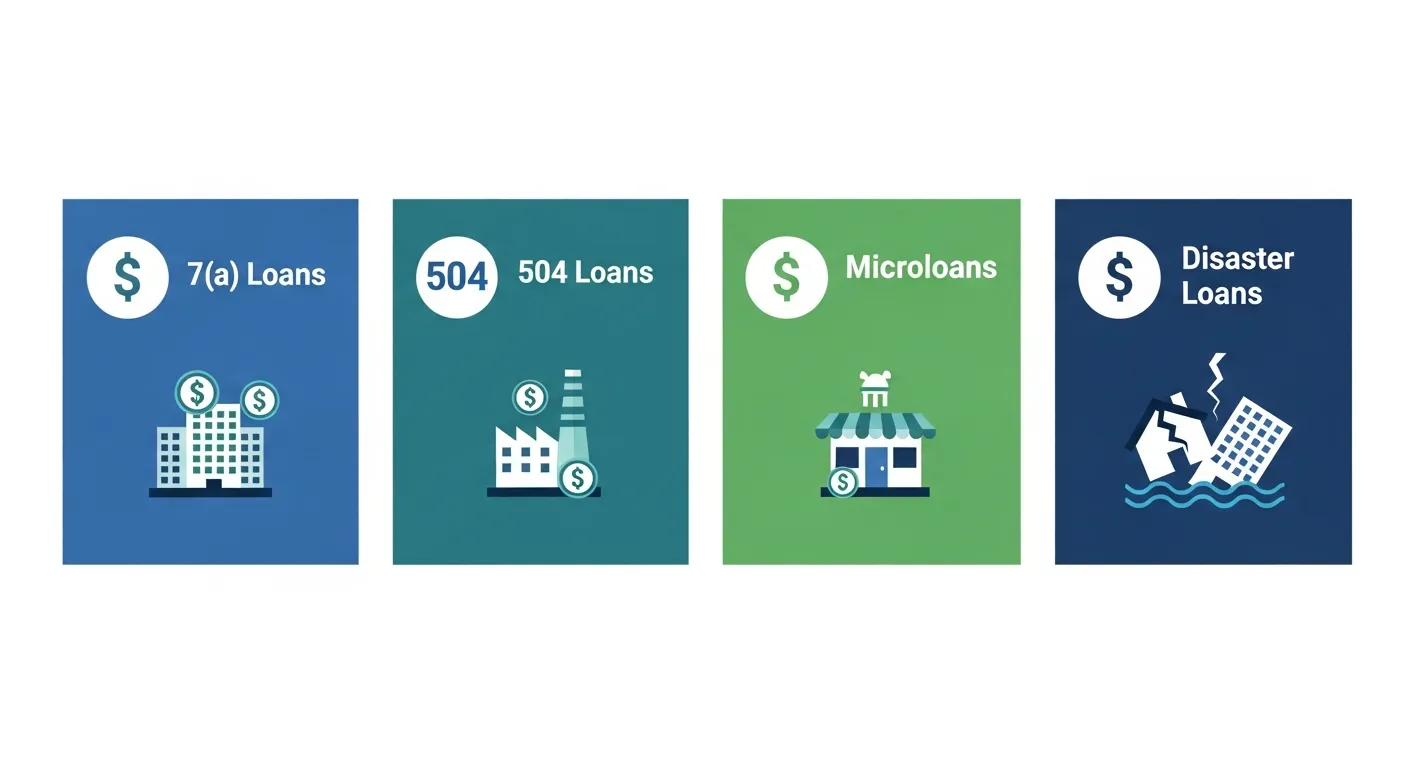
The SBA offers several loan programs, each designed for different business needs. Choosing the right one is the first step toward a successful application.
SBA 7(a) Loans: The Most Versatile Option
The 7(a) program is the SBA’s flagship offering and accounts for the majority of all SBA lending. It is the most flexible program, covering nearly any legitimate business purpose.
- Maximum amount: $5 million
- Repayment terms: Up to 10 years for working capital and equipment; up to 25 years for real estate
- Interest rates: Variable rates typically range from prime plus 2.25% to prime plus 4.75%, depending on loan size and term
- SBA guarantee: Up to 85% for loans of $150,000 or less; 75% for loans above $150,000
Common uses include working capital, equipment purchases, business acquisitions, debt refinancing, and commercial real estate. If you are not sure which SBA program fits your situation, the 7(a) is usually the best starting point.
The 7(a) program also includes specialized subtypes:
- SBA Express Loans: Faster processing (within 36 hours) for loans up to $500,000 with a 50% SBA guarantee
- Export Express: Up to $500,000 for businesses engaged in export activities
- Community Advantage: Designed for underserved communities through mission-based lenders
SBA 504 Loans: For Major Fixed Assets
The 504 program is purpose-built for purchasing commercial real estate, constructing new facilities, or acquiring heavy equipment. These loans use a unique three-party structure:
- A private lender covers 50% of the project cost
- A Certified Development Company (CDC), backed by the SBA, covers up to 40%
- You provide at least 10% as a down payment
Key details:
- Maximum SBA portion: Up to $5.5 million (up to $16.5 million for certain energy projects)
- Repayment terms: 10, 20, or 25 years
- Interest rates: Fixed rates on the SBA portion, typically between 5.5% and 7%
- Best for: Purchasing commercial property, major renovations, and large equipment
The 504 program’s fixed-rate structure makes it particularly attractive for long-term real estate investments where predictable monthly payments matter.
SBA Microloans: Starting Small
Microloans are ideal for startups and very small businesses that need modest amounts of capital. The SBA provides funds to nonprofit intermediary lenders, who then make loans directly to eligible borrowers.
- Maximum amount: $50,000 (average loan is approximately $13,000)
- Repayment terms: Up to 6 years
- Interest rates: Typically 8% to 13%, set by the intermediary lender
- Best for: Startups, inventory purchases, supplies, furniture, and working capital
Many microloan intermediaries also provide business training and technical assistance, which can be valuable if you are in the early stages of building your company.
SBA Disaster Loans: Recovery Funding
When a federally declared disaster strikes, the SBA offers low-interest loans directly to affected businesses. Unlike other SBA programs, these loans come straight from the SBA rather than through partner lenders.
- Maximum amount: $2 million
- Repayment terms: Up to 30 years
- Interest rates: As low as 4% for businesses without other available credit
- Best for: Repairing or replacing damaged property, machinery, equipment, and inventory after a disaster
SBA Loan Requirements: What Lenders Look For
Meeting the SBA’s eligibility requirements is the first hurdle. But keep in mind that individual lenders often have their own additional criteria on top of the SBA’s baseline standards.
Basic Eligibility Criteria
To qualify for most SBA loan programs, your business must:
- Operate for profit in the United States or its territories
- Meet SBA size standards based on your industry (defined by annual revenue or number of employees)
- Have exhausted other financing options first, as SBA loans are designed as a resource when conventional financing is unavailable on reasonable terms
- Be in an eligible industry (certain businesses like lending institutions, gambling operations, and speculative investments are excluded)
Credit Score Requirements
Your personal credit score plays a significant role in SBA loan approval. While the SBA itself does not set a minimum credit score, most lenders look for:
- 650+ for most SBA 7(a) loans (many lenders prefer 680 or higher)
- 680+ for SBA 504 loans
- No strict minimum for microloans, though stronger credit improves your terms
If your credit score is below these thresholds, do not assume SBA financing is out of reach. Improving your personal credit before applying can significantly improve your chances of approval and help you secure better interest rates. Tools like M1 Credit Solutions’ AI-powered credit repair platform can help you identify negative items on your credit reports and generate dispute letters to address inaccuracies.
Financial Requirements
Lenders will evaluate several financial factors:
- Cash flow: Your business must demonstrate the ability to repay the loan from operating income. Most lenders look for a Debt Service Coverage Ratio (DSCR) of 1.25 or higher.
- Time in business: At least two years of operating history is preferred, though startups can qualify for microloans and some 7(a) programs.
- Annual revenue: Varies by lender and loan size, but consistent revenue growth strengthens your application.
- Collateral: The SBA requires lenders to collateralize loans to the maximum extent possible, though inadequate collateral alone will not disqualify you if other factors are strong.
Personal Guarantee
Owners with 20% or more equity in the business must provide a personal guarantee. This means you are personally liable for repayment if the business cannot cover the debt. Understanding this requirement is essential before applying for any small business loan.
Current SBA Loan Interest Rates
SBA loan rates are tied to the prime rate, which currently stands at 6.75% as of early 2026. The SBA sets maximum interest rate caps that lenders cannot exceed.
SBA 7(a) Rate Structure
| Loan Amount | Variable Rate Cap (terms ≤ 7 years) | Variable Rate Cap (terms > 7 years) |
|---|---|---|
| $50,000 or less | Prime + 6.50% | Prime + 6.50% |
| $50,001 to $250,000 | Prime + 6.00% | Prime + 6.00% |
| $250,001 to $350,000 | Prime + 4.50% | Prime + 5.00% |
| Over $350,000 | Prime + 3.00% | Prime + 3.00% |
At the current prime rate of 6.75%, this means most larger 7(a) loans carry rates between approximately 9.75% and 13.25%.
SBA 504 Rates
The SBA-backed portion of 504 loans carries a fixed rate, typically between 5.5% and 7%. The private lender’s portion follows standard commercial loan rates, usually prime plus 2% to 3%.
SBA Guarantee Fees
SBA loans also carry guarantee fees that fund the program. For fiscal year 2026, guarantee fees typically range from 0.25% to 3.75% of the guaranteed portion, depending on loan size and maturity. Some fee waivers may apply for loans under $500,000 or for businesses in certain industries.
How to Apply for an SBA Loan: A Step-by-Step Process

The SBA loan application process typically takes 30 to 90 days from application to funding. Here is what to expect at each stage.
Step 1: Determine the Right Loan Program
Match your needs to the appropriate SBA program:
- General business purposes and flexibility: 7(a)
- Commercial real estate or major equipment: 504
- Small startup needs under $50,000: Microloan
- Disaster recovery: Disaster loan
If you are still exploring your options, our guide to how to get a small business loan can help you compare SBA programs alongside other financing options.
Step 2: Find an SBA-Approved Lender
Not all banks and lenders participate in SBA programs. Start your search with:
- The SBA Lender Match tool at sba.gov, which connects you with participating lenders in your area
- Preferred Lending Program (PLP) lenders, who have delegated authority to make credit decisions without waiting for SBA review, which speeds up the process
- Community Development Financial Institutions (CDFIs) for underserved communities
- M1 Credit Solutions’ business lending services, which connect you with a network of lenders and funding options tailored to your needs
Step 3: Gather Your Documentation
A complete application package is critical. Most SBA lenders require:
- SBA Form 1919 (Borrower Information Form) for all applicants
- Business and personal tax returns for the past two to three years
- Year-to-date profit and loss statement and balance sheet
- Business bank statements (typically the last 12 months)
- Business plan with financial projections (especially for startups)
- Business licenses and registrations
- Personal financial statement (SBA Form 413) for all owners with 20%+ equity
- Debt schedule listing all existing business and personal debts
- Collateral documentation if applicable
Missing or incomplete documentation is one of the top reasons applications get delayed. Prepare everything upfront to avoid unnecessary setbacks.
Step 4: Submit Your Application and Complete Underwriting
Once you submit your application, the lender will:
- Review your credit history (personal and business)
- Analyze your financial statements and cash flow
- Verify your collateral position
- Assess your industry and business viability
- Submit the loan to the SBA for final approval (unless they are a PLP lender with delegated authority)
Step 5: Close and Receive Funds
After approval, you will sign your loan documents, pay any closing costs and guarantee fees, and receive your funds. The total timeline from application to disbursement typically ranges from 30 to 90 days, depending on the program and lender.
SBA Loans vs. Conventional Business Loans
Understanding how SBA loans stack up against conventional options helps you make the right financing decision.
| Factor | SBA Loans | Conventional Business Loans |
|---|---|---|
| Interest rates | Capped by SBA (currently ~9.75% to 13.25%) | No caps; varies widely |
| Repayment terms | Up to 25 years | Typically 3 to 7 years |
| Down payment | As low as 10% | Often 20% to 30% |
| Approval speed | 30 to 90 days | 1 to 4 weeks |
| Credit requirements | 650+ (flexible) | 700+ (strict) |
| Documentation | Extensive | Moderate |
| Best for | Businesses needing favorable terms and longer repayment | Businesses that need fast funding with strong credit |
For business owners with credit challenges, SBA programs like microloans and Community Advantage loans offer more accessible pathways to funding than conventional lenders typically provide.
If SBA loans don’t fit your situation, explore our personal loans as an alternative business funding option guide.
How Your Credit Score Impacts SBA Loan Success
Your personal credit score is one of the most important factors in SBA loan approval. Lenders use it as a primary indicator of your financial reliability, and it directly affects both your approval odds and the interest rate you receive.
Here is why credit matters so much for SBA loans:
- Higher credit scores unlock lower rates. A borrower with a 750 credit score will typically qualify for rates at the lower end of the SBA cap, while someone with a 650 score may pay rates closer to the maximum.
- Stronger credit means higher approval odds. Many SBA-approved lenders have their own minimum credit thresholds that exceed the SBA’s baseline requirements.
- Business credit matters too. M1’s business credit building tools can help you strengthen your company profile before an SBA loan application. Building a strong business credit profile can supplement your personal credit and demonstrate your company’s financial responsibility.
If your credit is not where it needs to be, investing time in credit repair before applying for an SBA loan can save you thousands of dollars over the life of the loan. M1 Credit Solutions helps entrepreneurs strengthen their personal credit profiles using AI-powered tools that identify inaccuracies, generate dispute letters, and track progress in real time.
Learn about rebuilding credit with a secured credit card as a strategy to improve your credit score for SBA qualification.
Tips to Strengthen Your SBA Loan Application
Applying for an SBA loan is competitive. These strategies can improve your odds:
- Get your credit in order. Review your credit reports from all three bureaus and dispute any inaccuracies before applying. Even a 20 to 30 point improvement can make a significant difference.
- Build a strong business plan. A clear, data-backed plan shows lenders you have a viable strategy for repaying the loan.
- Demonstrate positive cash flow. Lenders want to see that your business generates enough revenue to cover existing obligations plus the new loan payment.
- Offer collateral when possible. While not always required, offering assets as security strengthens your application.
- Reduce existing debt. Paying down outstanding balances improves your debt-to-income ratio and DSCR.
- Start with a business line of credit. Building a track record of responsible borrowing and repayment creates positive credit history that SBA lenders value.
- Work with an experienced lender. PLP lenders have streamlined processes and deeper familiarity with SBA requirements.
Learn the importance of keeping your business and personal credit separate for stronger applications when preparing your SBA loan application.
Frequently Asked Questions About SBA Loans
What is an SBA loan?
An SBA loan is a business loan issued by an approved lender (bank, credit union, or online lender) that is partially guaranteed by the U.S. Small Business Administration. The SBA does not lend money directly. Instead, it reduces the lender’s risk by guaranteeing 75% to 85% of the loan, which results in lower rates, longer terms, and more accessible qualification standards for small business owners.
How long does it take to get an SBA loan?
The typical SBA loan process takes 30 to 90 days from application to funding. SBA Express loans can be approved within 36 hours, though funding still takes additional time. 504 loans often take 60 to 90 days due to the involvement of a Certified Development Company. Having complete documentation ready before applying can significantly speed up the process.
Are SBA loans personally guaranteed?
Yes. Any individual who owns 20% or more of the business must sign a personal guarantee. This means you are personally responsible for repaying the loan if the business cannot. Spouses may also be required to guarantee the loan depending on the lender and state community property laws.
Can I get an SBA loan with bad credit?
It is more difficult, but not impossible. SBA microloans through nonprofit intermediaries often have more flexible credit requirements. For a full overview of funding options, see our guide to business loans for bad credit. Some Community Advantage lenders also work with borrowers who have lower credit scores. However, improving your credit before applying will give you access to better programs, lower rates, and higher loan amounts. Explore options for business loans with bad credit while you work on strengthening your credit profile.
What can I use an SBA loan for?
SBA 7(a) loans can be used for nearly any legitimate business purpose, including working capital, equipment, inventory, real estate, business acquisitions, and debt refinancing. SBA 504 loans are restricted to major fixed assets like commercial property and heavy equipment. Microloans can cover working capital, inventory, supplies, and equipment.
How much can I borrow with an SBA loan?
Maximum loan amounts vary by program: $5 million for 7(a) loans, $5.5 million for the SBA portion of 504 loans, and $50,000 for microloans. The actual amount you qualify for depends on your business’s financial strength, credit profile, and intended use of funds.
Take the Next Step Toward SBA Financing
SBA loans remain one of the most powerful financing tools available to small business owners. Lower rates, longer terms, and government backing make them an attractive option for businesses at nearly every stage of growth. The key to success is preparation: strong credit, organized financials, and a clear business plan.
Whether you are ready to apply now or want to strengthen your financial profile first, M1 Credit Solutions can help. Our AI-powered credit repair platform helps you address credit issues that could hold back your application, and our business lending services connect you with the right lenders for your specific situation.
Ready to prepare for your SBA loan application? Get started with M1 Credit Solutions or call us at (833) 261-2677 to explore your options.