

Lenders often charge subprime buyers three times more in interest than those with good credit. This gap adds thousands of dollars to the total cost of a car over five years.
Ready to fix your credit before you buy? Start your M1 Credit Solutions journey today and see what you qualify for.
A car loan with bad credit is a specific type of auto loan often built for buyers with FICO scores that fall between 300 and 629. While you can still buy a car with a low score, you should plan to pay higher interest rates than buyers with good credit scores. You may also need to give extra proof of your monthly income or offer a larger down payment to lower the risk for lenders. According to CNBC, working with a cosigner or getting preapproval from a local credit union can help you get much better loan terms. You should also find a lender that reports your monthly payments to the bureaus so your loan helps fix your credit score over time.
Many buyers worry that a past bankruptcy will keep them from owning a car. However, the lending market has paths for people in many spots. We will explore the answer to the question: Can You Get a Car Loan With Bad Credit? To find a deal, the path starts here.
Can You Get a Car Loan With Bad Credit?
You can get a car loan even if your credit score is low. Many lenders focus on helping people with poor credit buy a car. While a low score makes the process harder, it does not stop you from getting on the road. Most car buyers with lower scores fall into groups that banks call subprime or deep subprime.
Knowing Your Credit Tier
Lenders use specific ranges to decide who gets a loan and what the rate will be. If your score is between 300 and 629, banks see you as a subprime borrower. Within this group, a score from 300 to 499 is deep subprime. Knowing your tier is the first step toward finding the right lender for your needs.
It helps to look at credit score ranges to see how your number fits with others. Most deep subprime loans come from lenders or car lots that handle their own loans. These lenders focus more on your current pay and less on your past credit slips. They want to see that you can pay the monthly bill now.
Lenders also look at your debt compared to your pay. Even with a low score, a steady job and low bills can help you get a “yes.” Some lenders may ask for more cash down to lower their risk. This cash shows you mean to pay the loan and cuts the total amount you take.
Bottom line: A low credit score does not disqualify you from getting a car loan, but it shifts the terms — expect higher rates and stricter income requirements.
The Cost of Low Scores
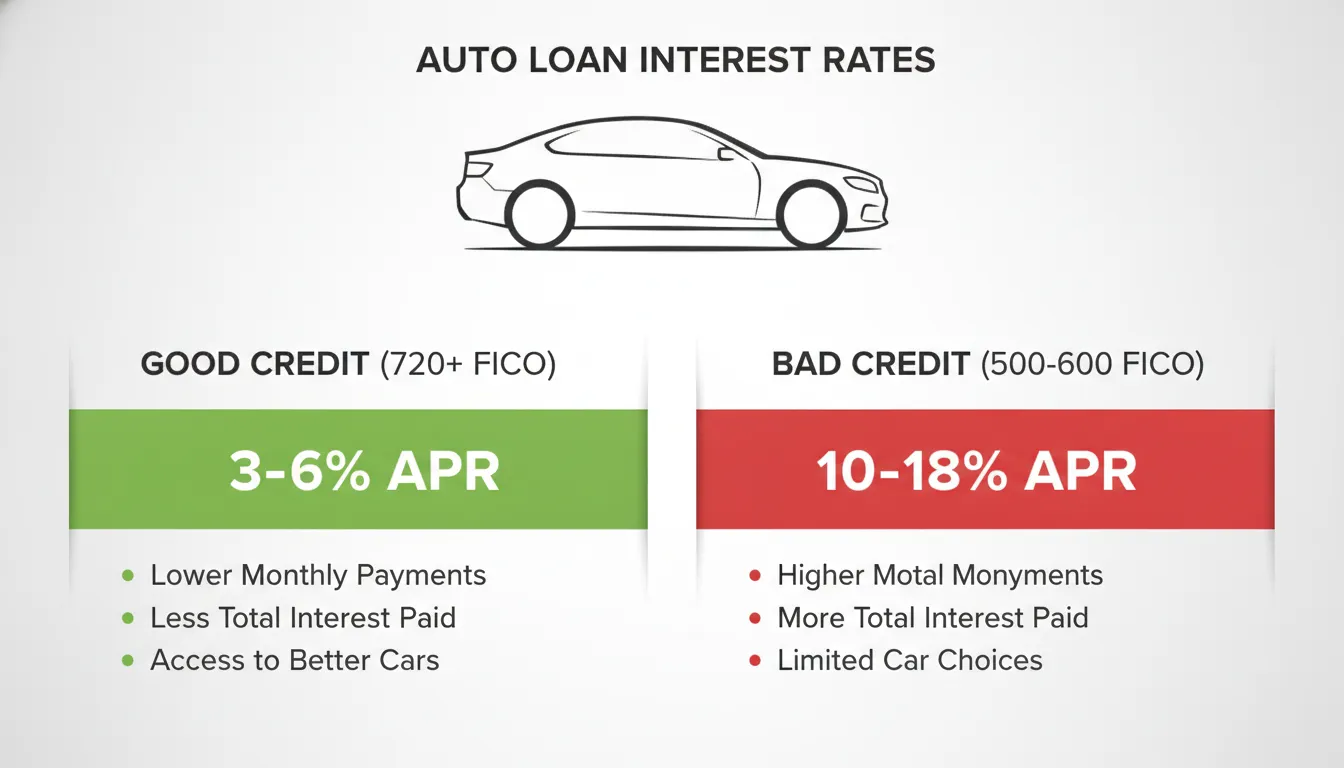
While you can get a loan, it will cost more than a standard one. The main gap is the interest rate. People with good credit might see rates between 3% and 6%. But subprime borrowers often pay between 10% and 18% interest. In some cases, deep subprime rates can go even higher depending on the bank.
This gap in rates adds up fast over time. A 100-point jump in your score can save you thousands of dollars on a five-year loan. Higher interest means more of your money goes to the bank instead of the car. This is why many people use tools from M1 Credit Solutions to fix errors before they buy.
The total cost of the car is much higher when interest rates are in the double digits. You may end up paying far more than the car is worth by the time the loan ends. It is wise to check the total interest cost before you sign. This helps you see if the monthly pay is truly a good deal.
Bottom line: Subprime interest rates (10-18%) can more than double the total cost of a car compared to prime rates (3-6%), making credit improvement a high-value step before financing.
Why Lenders Take the Risk
Lenders approve bad credit loans because they use the car as a backup. If you stop paying, the bank can take the car back to cover its loss. Some lots use a “buy here, pay here” model where they act as the bank themselves. According to the Consumer Financial Protection Bureau, these loans often have very high rates.
Lenders also know that a car is a must for most people to get to work. They bet that you will pay your car bill first so you can keep your job. This is why they often ask for proof of a steady job and a home address.
How Lenders Evaluate Borrowers With Low Credit Scores
When you apply for a car loan with bad credit, lenders look at more than just your score. They want to know if you can pay the money back. Your credit score is a big part of the choice. But it is not the only thing that counts. Lenders check your whole money life to see the risk. They want to be sure you will not miss payments and leave them with a loss.
Income and Debt Limits
Your monthly pay is a top fact for car lenders. They want to see that you earn enough to pay for the car and your other bills. Most banks check your debt-to-income ratio. This number shows how much of your pay goes to debt each month. If too much of your check goes to bills, a lender might say no. They want to see that you have cash left for gas, food, and car repairs. Lenders also want to see that you have a steady job. They often ask for pay stubs to prove you have a stable check. Per CFPB rules, most lenders need proof of where you live. You also must show proof of car insurance. These rules apply to all buyers, even those with high scores. M1 Credit Solutions suggests keeping all your pay records in one place before you go to the lot.
Bottom line: Lenders evaluate income stability and debt-to-income ratio alongside your credit score — a steady job and low existing debt improve your approval odds significantly.
Special Auto Credit Scores
Not all credit scores are the same. Many car lenders use a FICO Auto Score. This is a special score made just for car loans. It looks closely at your past car payments. If you have paid for cars on time before, this score might be higher. This score can be different from the one you see on your phone app. Lenders also look at your loan-to-value ratio. This is the price of the car compared to the loan amount. If you try to borrow more than the car is worth, a bank may say no. This often happens if you roll old debt into a new loan. Keeping this ratio low makes it easier to get a “yes” from a lender.
Bottom line: Auto lenders use specialized FICO Auto Scores that weigh your vehicle payment history more heavily than other credit factors.
Interest Rates and Credit Ranges
Your credit score tells the lender what rate to give you. In the car world, a subprime credit score is between 300 and 629. If your score is between 300 and 499, it is deep subprime. These tiers set how much the loan will cost you in the end. A lower score means you pay more for the same car as someone with good credit. People with low scores pay much more for their cars. The average interest rate for subprime buyers is often between 10% and 18%. This is much higher than the 3% to 6% rates that prime buyers get. By knowing credit score ranges, you can see how your score hits your wallet. Small gains in your score can lead to much better rates. This is why many people use M1 Credit Solutions to fix errors before they shop.
Bottom line: Even a 50-100 point score improvement can move you from deep subprime to subprime tier, unlocking significantly lower interest rates.
Down Payments and Co-signers
A large down payment can help you get a loan when your credit is poor. This cash lowers the amount you need to borrow. It shows the lender that you are serious about the car. It also makes the risk lower for the bank. Many lenders feel better when you put at least 10% or 20% down. If you have no cash for a down payment, your rate will likely be higher. If your score is still too low, you might need a co-signer. Most big lenders like Capital One and Ally allow this. A co-signer is someone with good credit who signs the loan with you. They promise to pay if you do not. This helps you get a better rate. Working with M1 Credit Solutions can help you boost your score so you do not need a co-signer later.
Bottom line: A 10-20% down payment reduces lender risk and can help you qualify for a car loan with bad credit at better terms.
Best Auto Loan Options for Bad Credit Borrowers
Finding a car loan with bad credit is easier than most people think. Many lenders now focus on people with subprime scores. While interest rates are higher for these tiers, you have many ways to get the keys to a car. The best choice depends on your score, your income, and if you have a cosigner. Check all your options to find the best fit for your budget.
| Option Type | Best For | Main Advantage | Key Drawback |
|---|---|---|---|
| Credit Unions | Lowest rates | Member-focused help | Must join the group |
| Online Lenders | Speedy choice | Fast pre-checks | No in-person help |
| Standard Dealers | One-stop shop | Access to many banks | Likely higher markups |
| BHPH Lots | Low scores | Easy to get a loan | High interest costs |
Bottom line: Credit unions and online lenders offer the best mix of rates and speed for subprime buyers.
Credit unions and local banks
Credit unions like CUSO Cal and Metro FCU are often the best place to start. These member-owned firms often have easy rules for people with bad credit. They often look at your whole money life instead of just a single score. If you have a steady job and a history with the bank, you may get a much better rate than a big national bank would offer. Member perks often include money tools that help you manage your debt better over time. Many local banks and credit unions also provide ways for improving your credit. They want to see you succeed so you can pay back the loan on time. Some even offer special programs for first-time buyers or those with no credit past. Talking to a loan worker in person can help you explain any past credit slips. This personal touch can make a big change when your score is on the edge.
Bottom line: Local firms often give better rates because they know their members well.
Online lenders and pre-checks
Tech companies and web platforms have changed how people shop for cars. Online lenders like Carvana often let you see your rate before you apply. This is called a pre-check. It mostly does not hurt your credit score because it uses a soft check. Large brands also allow cosigners. A cosigner can help you secure a better deal if your score is low. This can save you thousands of dollars in interest fees over the life of the loan. Capital One and Autopay are top picks for people who want a fast loan. These lenders have clear rules and can give you an answer in minutes. By checking your rate online first, you know just what you can afford before you walk onto a car lot. This gives you more power to say no to bad deals that a dealer might try to push on you. You can shop for a car with the trust of a cash buyer.
Bottom line: Online tools help you find your rate without a hard hit to your credit score, giving you leverage at the dealership.
Dealer and lot options
Some car lots act as the lender themselves. This is known as buy-here-pay-here (BHPH) loans. These lots are a common choice for people with low scores because it is easy to get a loan. They care more about your proof of income and a down payment than your past credit mistakes. This makes them a fast way to get a car if you have been turned down elsewhere. Many dealers use these loans to help people get back on the road quickly. But you must be careful with these lots. Most BHPH dealers do not report your on-time pay to the credit bureaus. According to the Consumer Financial Protection Bureau, a subprime loan often carries much higher interest rates. If the lender does not report your on-time pay, the loan will not help rebuild your score. Always ask if they report to the bureaus before you sign any paper. A loan that does not help your credit is a missed chance to grow.
Bottom line: Only use lot-based loans as a last resort because they often charge the most in fees and interest, and may not report on-time payments to credit bureaus.
How to Improve Your Approval Odds Before You Apply
Applying for a car loan with bad credit can feel risky, but you can take steps to help your case. Lenders look for signs that you can and will pay them back. By prepping your finances before you head to the lot, you show them you are a low-risk borrower.
Bottom line: Pre-loan prep shows lenders you are a low-risk borrower and helps you qualify for better rates.
-
Check your credit reports for errors
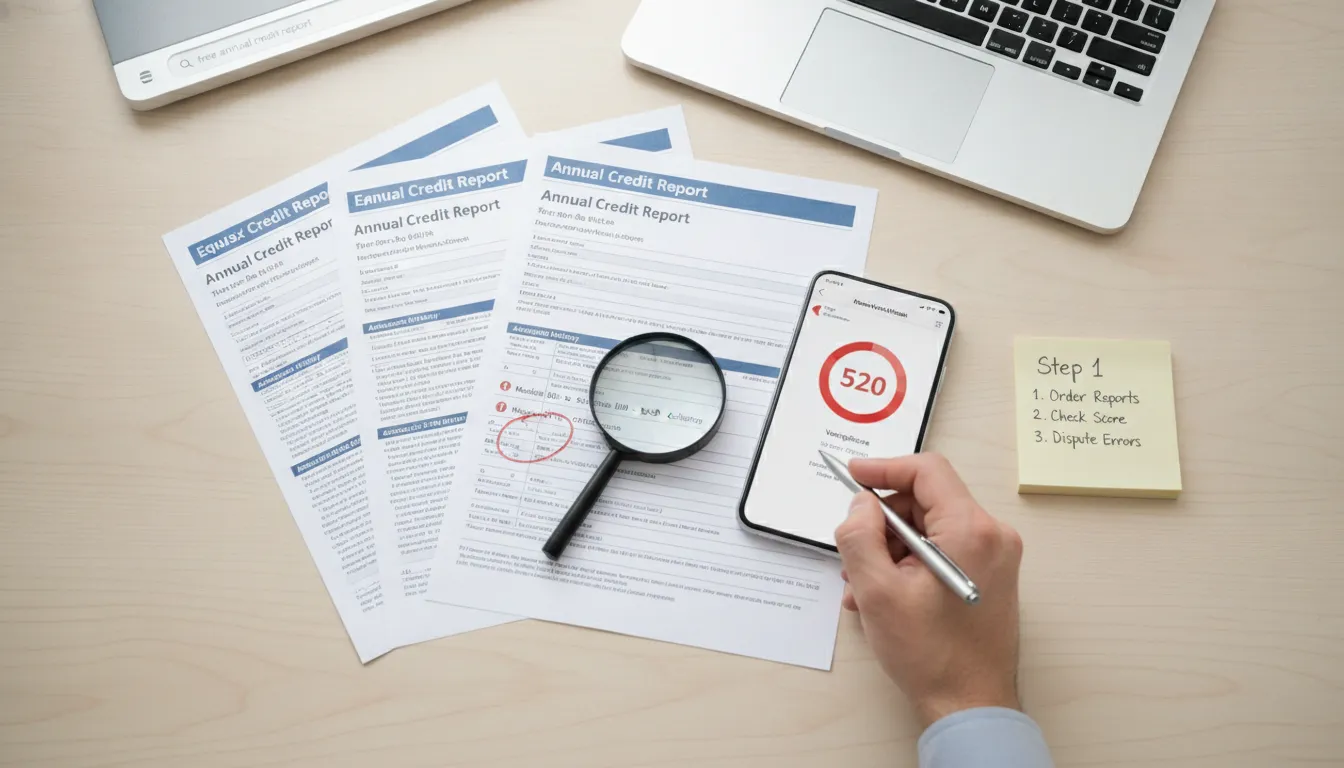
Look at your reports from all three bureaus. Even small mistakes like a wrong address or an old debt can hurt your score. You can use M1 Credit Solutions to find these errors and start the dispute process fast.
-
Save for a larger down payment
A big down payment shows the lender you are serious. Aim to save 10% to 20% of the car price to lower the total amount you need to borrow. The Consumer Financial Protection Bureau notes that a larger down payment helps you get a lower rate.
-
Get preapproved with multiple lenders
Do not just take the first offer from the car dealer. Check with credit unions and online lenders first to see what rates you can get. Research from the Office of the Comptroller of the Currency shows that preapproval gives you more power to bargain.
-
Consider a cosigner
If your score is very low, a cosigner with good credit can help. Most big lenders, like Capital One, allow cosigners to back your loan. This person shares the risk with you, which makes lenders more likely to say yes.
-
Lower your DTI ratio
Lenders check your debt-to-income (DTI) ratio to see how much of your pay goes to bills. Try to pay down small debts or credit card balances to lower this number. This shows you have enough room in your budget for a new car payment each month.
-
Choose a less expensive vehicle
A cheaper car means a smaller loan, which is easier for a lender to approve. Pick a reliable used car instead of a new one to keep your total debt low.
These moves take time, but they can save you thousands of dollars in interest. Being ready before you apply is the best way to get a car loan with bad credit that you can actually afford.
How Much Car Can You Afford With Bad Credit?
Before you visit a lot, you must know what your budget allows. When you have a low credit score, your monthly payment often grows because of high interest rates. Using the 28/36 rule is a smart way to start. This guideline says your total debt should not take more than 36% of your monthly pay. By limiting your car payment to a small part of your income, you keep your finances safe if costs rise.
Bottom line: The 28/36 rule helps you determine a safe car payment based on your income, preventing overextension on a high-interest loan.
Understand the Cost of High Interest
Interest rates have a huge impact on what you pay for a vehicle. According to standard industry data, subprime borrowers often see rates between 10% and 18%, while prime borrowers pay much less. A high rate means you pay more for the same car over time. This makes calculating the total loan cost vital. You should look at the full price, not just the monthly bill, to see the true cost of a car loan with bad credit.
A 100-point jump in your score can save you thousands of dollars in interest on a typical 60-month loan. This is why many people focus on how to improve your credit score before applying for a loan. Lowering your rate by just a few points can cut your total cost significantly. M1 Credit Solutions helps users find ways to boost their scores so they do not get stuck with the highest rates.
Bottom line: Every percentage point of interest you save through credit improvement translates to real cash — potentially thousands over the life of your loan.
Compare Loan Math Examples
Let’s look at how rates change what you pay for a $20,000 car over five years. At a 6% rate, your monthly payment is about $387, and you pay $3,200 in total interest. If your rate jumps to 15% due to a low score, your payment rises to $476. Over the life of the loan, you will pay over $8,500 in interest. That is a difference of more than $5,000 for the exact same car. You can check your own rates at consumerfinance.gov to see how much you might save.
| Credit Tier | Interest Rate | Monthly Payment | Total Interest (5 Yrs) | Extra Cost vs Prime |
|---|---|---|---|---|
| Prime (660+) | 6% | $387 | $3,200 | $0 |
| Subprime (500-629) | 10% | $425 | $5,500 | $2,300 |
| Deep Subprime (300-499) | 15% | $476 | $8,500 | $5,300 |
Bottom line: Higher interest rates for subprime loans mean you must choose a cheaper car or make a larger down payment to stay within your budget.
Save Money With Smarter Choices
You can lower your costs by choosing a shorter loan term. While a longer loan makes the monthly payment smaller, it increases the total interest you pay. Buying a reliable used car instead of a new one also helps. A smaller loan amount means you pay less in interest even if your rate is high. This plan keeps your debt low while you work on building better credit for your next purchase.
Bottom line: Choosing a shorter loan term and a less expensive vehicle reduces your overall interest cost, even with a subprime rate.
Ready to check your credit? Start your M1 Credit Solutions journey today and see your credit score for free.
How a Car Loan Can Help or Hurt Your Credit
Getting a car loan with bad credit is a big move. It can be a great tool to build your score or a source of deep stress. When you pay on time, a car loan shows you can handle debt. But one late payment can lead to big problems. You must understand how this loan affects your financial path.
Bottom line: A car loan is a double-edged sword for your credit — on-time payments build history, but missed payments can cause significant damage.
Building Credit With On-Time Payments
Your payment history is the most vital part of your credit score. Based on data from FICO, payment history counts for 35% of your total score. Each month you pay on time, your lender tells the credit bureaus. This steady work is a top way to prove you are a safe borrower for future loans.
A car loan also helps your credit mix. Lenders like to see that you can manage both credit cards and fixed loans. By adding a car loan, you show a full view of your money habits. If you are rebuilding credit after a repossession, a new loan can help cover old marks with fresh data.
Bottom line: Payment history makes up 35% of your FICO score, making a car loan with on-time reporting a powerful credit-building tool.
The Risks of Subprime Auto Loans
Car loans have risks for those with low scores. Interest rates for subprime loans often sit between 10% and 18%. High rates mean your monthly costs will be large. If your budget is tight, you might miss a day. A late payment can stay on your report for seven years and make your score drop fast. There is also the risk of losing the car. If you fall behind, the lender can take the car back. This will hurt your score and leave you with a bill. You may still owe money if the lender sells the car for less than your loan. This debt can lead to more credit damage and collections.
Bottom line: Missing payments on a subprime auto loan can trigger repossession, collections, and seven years of negative credit reporting.
Why Some Lenders Do Not Help
Not all car loans help your credit score. Many buy-here-pay-here car lots do not report your payments to the bureaus. If they do not report, your on-time payments will not help you grow your score. It is wise to ask a lender if they report to Equifax, Experian, and TransUnion before you sign a deal. An auto loan only builds credit if the data reaches your report. If you use a lender that stays quiet, you get the debt but no score boost. A better path for many is improving your credit before you buy. This helps you get a lower rate and ensures your on-time work counts.
Bottom line: Always confirm a lender reports to all three credit bureaus before signing — otherwise your on-time payments will not help your credit score.
How M1 Credit Solutions Can Help You Get Better Loan Terms
If you need a car loan with bad credit, fix your score before you visit a car lot. A higher credit score leads to lower interest rates and better loan terms. M1 Credit Solutions gives you the tools to take control of your credit. Our AI platform looks at your credit reports from all three bureaus to find items that pull your score down.
Bottom line: Improving your credit before applying for a car loan can save you thousands in interest — and M1 Credit Solutions makes the process fast and affordable.
Fix errors and negative items
Many credit reports have mistakes that can hurt your approval odds. You have a legal right to dispute wrong items under the FCRA. M1 Credit Solutions helps you find these mistakes and auto-generates dispute letters for you. The CFPB reports that one in five consumers has a mistake on at least one credit report. Fixing those errors can raise your score enough to move you into a lower interest tier.
Bottom line: Up to 20% of credit reports contain errors — removing them can boost your score and improve your car loan options.
Save money on your auto loan
Using M1 Credit Solutions for a few months before you buy a car can lead to real savings. A 50-point jump in your score can cut your interest rate by several percentage points. On a $25,000 car loan, that can save you over $2,000 in interest. The platform costs just $29.99 per month, making it an affordable step toward better loan terms.
Bottom line: A few months of credit repair with M1 Credit Solutions can save you thousands on your auto loan — far more than the small monthly cost.
Affordable AI credit repair
Traditional credit repair agencies charge $100 to $150 per month for the same work. M1 Credit Solutions offers AI-powered credit repair for just $29.99 per month. This makes it easy to improve your credit score before you shop for a car loan. The platform uses AI to auto-generate dispute letters based on your unique credit report, making the process fast and simple. You stay in control while the technology handles the heavy lifting.
Bottom line: At $29.99/month, M1 Credit Solutions is the most affordable way to repair your credit and qualify for better car loan rates.
Frequently Asked Questions
Can I get a car loan with bad credit and no down payment?
Yes, you can find “zero down” car loans even with a lower credit score, but they often come with much higher interest rates. Lenders see these loans as a high risk because the car has no extra value yet. Most experts say you should save at least 10% to 20% of the car price first. This lowers your monthly cost and makes it easier to get a better loan offer from more lenders.
Will financing a car help improve my credit score?
Buying a car can help your score if your lender reports your on-time payments to the three main credit bureaus. As noted by CNBC, many lenders report this data, which builds a history of good debt habits. However, you should check with your lender first. Some “buy-here-pay-here” dealerships do not report your payments, which means the loan will not help you fix your credit history at all.
How much more does a car loan cost with bad credit?
A low credit score can add thousands of dollars to the total cost of your car. While a buyer with good credit might get a rate near 5%, those with lower scores often pay 10% to 18% in interest. On a $30,000 loan, this gap can cost you over $100 more each month. Fixing your score even a little before you apply can help you get lower rates and save a lot of money.
Can I get a car loan if I have a recent repossession?
You can still get a car loan after a repossession, but you will likely need to wait at least six months. Lenders will want to see that you have a steady income and have made on-time payments on other bills since the event. You may also need a larger down payment or a cosigner to get approved. Tools like M1 Credit Solutions can help you find and fix errors on your credit report.
Ready to fix your credit and get a better car loan?
Getting a car loan with bad credit does not have to mean paying the highest rates forever. By checking your credit reports, disputing errors, and improving your score before you apply, you can save thousands of dollars. M1 Credit Solutions gives you the AI-powered tools to take control of your credit in minutes. For just $29.99 per month, you get unlimited AI dispute letters, monthly 3-bureau credit reports, and a real-time progress dashboard. Do not let a low score cost you more than it should.
Start your M1 Credit Solutions journey today and see your credit score for free.