

Thin Credit File: How to Build Credit From Scratch
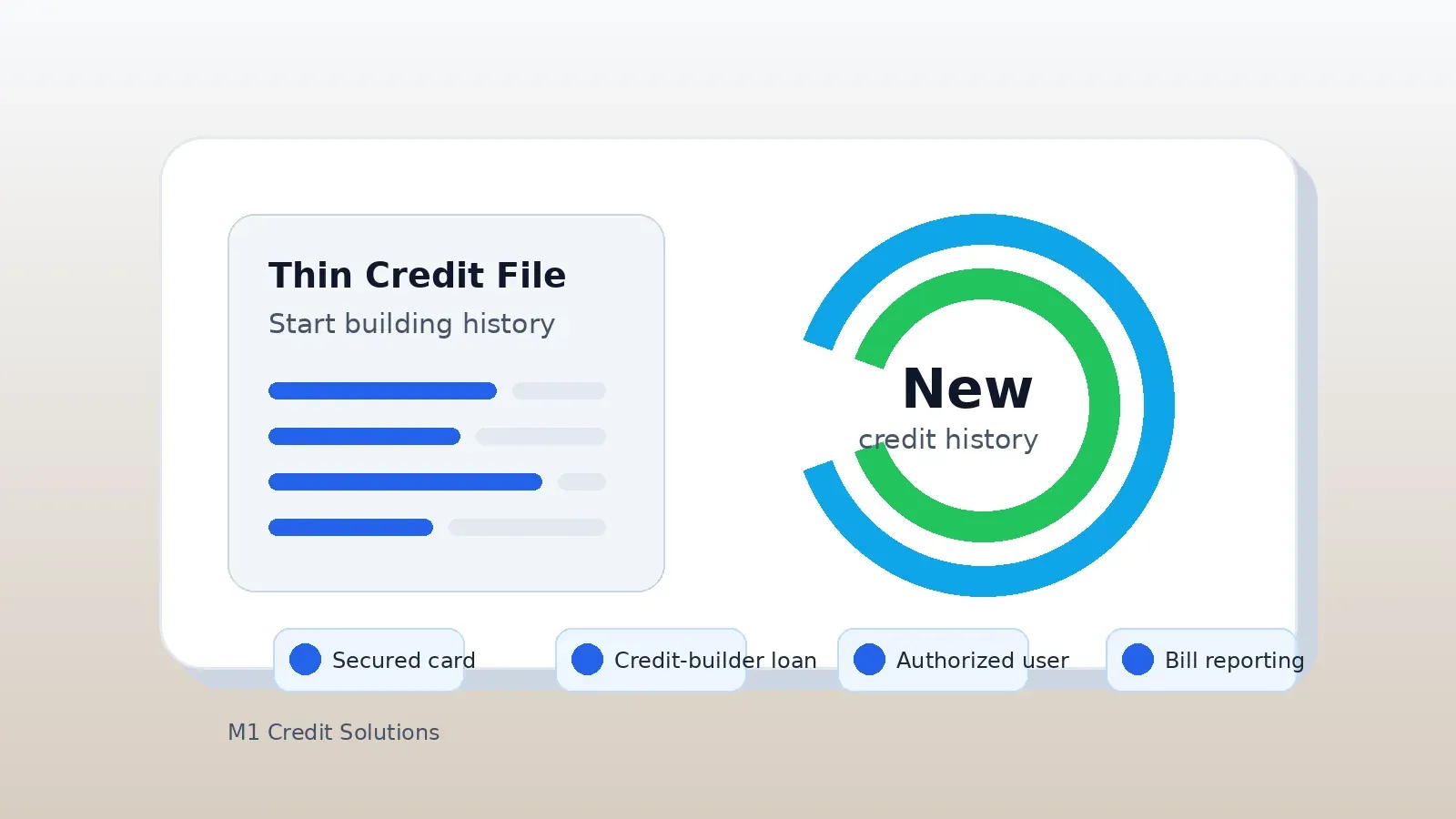
A thin credit file can make you feel invisible to lenders. You may pay rent on time, keep money in the bank, and avoid debt, but if the credit bureaus do not have enough account history in your name, lenders may still see you as risky. That can lead to denied applications, higher deposits, expensive interest rates, or a frustrating message that says you do not have enough credit history.
Start the M1 credit-building journey and get a clear plan for building a stronger credit profile from where you are today.
The good news is that a thin credit file is not permanent. You can build credit with no history by opening the right starter accounts, making every payment on time, keeping balances low, and tracking what appears on your reports. This guide explains what a thin file means, why it matters, which strategies work, and how M1 Credit Solutions helps you turn limited history into a growing credit profile.
What Is a Thin Credit File?
A thin credit file means the credit bureaus have little or no information about your credit activity. In simple terms, there are not enough active or recent accounts in your credit report for lenders and scoring models to judge how you manage borrowed money.
You may have a thin file if you:
- Have never had a credit card or loan in your name
- Recently moved to the United States and do not have U.S. credit history
- Paid cash or used a debit card for most purchases
- Closed old accounts years ago and have not opened new ones
- Only have accounts that do not report to the major credit bureaus
- Are a young adult, new graduate, or first-time borrower
A thin file is different from bad credit. Bad credit usually means there is negative information, such as late payments, collections, charge-offs, or high credit utilization. A thin file means there may not be enough information, positive or negative, to build confidence with lenders.
Some people have both issues at the same time. For example, you may have one old collection account but no open positive accounts. In that case, your credit file is limited and damaged, which is why building new positive history matters so much.
Why a Thin Credit File Hurts Your Financial Life
Credit decisions are based on trust. Lenders want to know whether you have borrowed before, whether you paid on time, how much available credit you used, and how long you have managed accounts. A thin credit file gives them very little to review.
That lack of history can affect everyday financial goals, including:
- Credit card approvals: You may be denied for prime cards or offered starter products with lower limits.
- Auto loans: A lender may approve you only with a higher interest rate or larger down payment.
- Apartment applications: Some landlords use credit reports to decide whether to approve a tenant or require a larger deposit.
- Personal loans: Limited history can make it harder to qualify without a cosigner.
- Insurance and utilities: Some providers may ask for deposits when they cannot verify a strong credit record.
- Business funding: Small business owners often need personal credit strength before qualifying for better financing terms.
A thin file can also make your score more sensitive. With only one or two accounts, one late payment or one high balance can have an outsized effect. The goal is to create a wider base of positive information so your credit profile becomes easier to evaluate and more resilient over time.
How Long Does It Take to Build Credit With No History?
Building credit from scratch takes time because scoring models need reported activity. Many people can begin creating a credit file within a few months after opening an account that reports to the bureaus. Building a stronger score usually takes longer because payment history, account age, and responsible usage have to accumulate.
A practical timeline looks like this:
- Month 1: Review your reports, choose a starter strategy, and open one account that reports to the major bureaus.
- Months 2-3: Make small purchases or payments, pay on time, and confirm the account appears on your reports.
- Months 4-6: Continue on-time payments, keep balances low, and consider a second credit-building tool if your budget can handle it.
- Months 6-12: Build consistency, avoid unnecessary applications, and review your score movement.
The most important rule is simple: do not rush. A thin credit file improves through consistent reporting, not through opening every account you can find. Start with one or two manageable tools, use them responsibly, and let the data build.
Proven Ways to Build Credit With No History
There is no single best path for everyone. The right strategy depends on your cash flow, current score status, approval odds, and comfort level with credit products. These are the most common ways to build credit from a thin file.
1. Open a Secured Credit Card
A secured credit card is one of the most accessible starter tools for people with limited or no history. You place a refundable security deposit, and that deposit usually becomes your credit limit. If you deposit $200, your starting limit may be $200.
The card works like a regular credit card. You make purchases, receive a statement, and pay the bill. The issuer reports your activity to the credit bureaus. If you pay on time and keep the balance low, the account can help create positive history.
Use a secured card carefully:
- Choose a card that reports to all three major bureaus
- Look for no annual fee or a low total cost
- Charge one small recurring expense, such as gas or a subscription
- Pay the statement balance in full every month
- Keep the balance well below the limit, ideally under 30% and lower if possible
If you want a deeper starter-card strategy, read M1’s guide on how to use a secured credit card to build credit.
2. Use a Credit-Builder Loan
A credit-builder loan is designed for people who need payment history more than borrowed cash. Instead of receiving the money upfront, the lender usually places the loan amount in a locked savings account. You make monthly payments, and after the term ends, you receive the funds, minus any fees or interest.
The main benefit is payment reporting. If the lender reports to the credit bureaus and you pay on time, the loan can add installment-loan history to your credit profile. That can be useful if you only have a secured card or no accounts at all.
Before choosing a credit-builder loan, ask:
- Does the lender report to Experian, Equifax, and TransUnion?
- What is the monthly payment?
- What are the total fees and interest costs?
- Can I afford the payment without stress?
- When will the lender report my payment activity?
A credit-builder loan should help your budget, not strain it. If the payment is too high, choose a smaller loan or wait until your cash flow is stable.
3. Become an Authorized User
Becoming an authorized user means someone adds you to an existing credit card account. If the card issuer reports authorized-user activity, the account may appear on your credit reports. This can help if the account has a long history, on-time payments, and low utilization.
This strategy requires trust. The primary cardholder is responsible for the bill, and their behavior can affect what appears on your report. A card with missed payments or high balances could hurt instead of help.
Before becoming an authorized user, confirm that:
- The card has a clean payment history
- The balance is low compared with the limit
- The account is not new
- The issuer reports authorized users to the credit bureaus
- You and the primary cardholder agree on whether you will receive or use a card
M1 explains this topic in more detail in Tradelines and Authorized Users Explained.
4. Report Bills You Already Pay
Some services can help you get credit for bills that do not always appear on traditional reports, such as utilities, phone bills, streaming services, or rent. Experian Boost is one well-known option that may add eligible payment history to your Experian credit file.
Bill reporting can be helpful, but it is not a complete replacement for credit accounts. Some lenders may rely on reports or scores that do not include every alternative-data service. Treat it as a supplement, not the whole plan.
Still, if you already pay bills on time, reporting that history can be a smart early step. It may help create more data around your payment habits while you build traditional credit with a secured card or loan.
5. Use Credit Card Matching Before Applying
When you have a thin credit file, random applications can backfire. Each hard inquiry can affect your score, and repeated denials do not help you build history. Credit card matching tools can help you compare cards that may fit your current profile before you apply.
Use matching as a screening step, not a guarantee. Review the fees, deposit requirements, bureau reporting, and upgrade path before choosing a card. M1’s guide to credit card matching services can help you understand how these tools work.
Need help choosing a credit-building path? Create your M1 Credit Solutions account to review your profile, identify next steps, and build with a plan instead of guesswork.
Comparison Table: Top Secured Cards to Consider
Secured card details change often, so always confirm current terms on the issuer’s website before applying. The best secured card for a thin credit file is usually one that reports to the major bureaus, has low fees, fits your deposit budget, and gives you a path to better credit over time.
| Secured card | Best for | Typical minimum deposit | Annual fee | Why it may help a thin file |
|---|---|---|---|---|
| Discover it Secured Credit Card | Rewards while building | $200 | $0 | Reports to the major bureaus and may offer a path to an unsecured card with responsible use. |
| Capital One Platinum Secured Credit Card | Lower possible deposit | $49, $99, or $200 depending on approval | $0 | Can be useful for beginners who qualify for a deposit below the full starting limit. |
| Capital One Quicksilver Secured Cash Rewards Credit Card | Simple cash back | $200 | $0 | Combines credit reporting with straightforward rewards for users who pay in full. |
| Bank of America Unlimited Cash Rewards Secured Credit Card | Bank relationship builders | $200 | $0 | May fit consumers who want a secured card from a major bank with rewards potential. |
| OpenSky Plus Secured Visa Credit Card | No credit check option | $300 | $0 | May fit people worried about approval, but review all terms and costs before applying. |
Do not choose a card only because it has rewards. If you are building credit with no history, the first priority is reporting, affordability, and manageable usage. Rewards are only valuable if you avoid interest and fees.
How M1 Helps Thin-File Users Build a Stronger Credit Profile
M1 Credit Solutions is built for people who want a clearer, more affordable way to understand and improve their credit. For thin-file users, that starts with knowing what is actually on your reports, what is missing, and which steps can create positive history.
M1 can help by giving you:
- Credit report visibility: See what is reporting and whether your file contains errors, outdated items, or missing information.
- AI-powered guidance: Get a more organized view of what may be hurting your profile and what steps to prioritize.
- Dispute letter support: If inaccurate negative information appears on your reports, M1 can help you create customized dispute letters.
- Progress tracking: Monitor changes over time so you know whether your credit-building actions are showing up.
- Education and control: Learn how credit works without handing the entire process to an expensive agency.
A thin credit file is not solved by one button. It is solved by a sequence: review your reports, correct errors, add positive accounts, pay on time, keep balances low, and track progress. M1 helps you stay organized through that process.
If your thin file also includes errors, start by learning how to check your credit report for free. Knowing what the bureaus currently show is the foundation for every smart credit-building decision.
Common Mistakes to Avoid With a Thin Credit File
When you are eager to build credit, it is easy to move too fast. Avoid these mistakes so your new history helps instead of hurting.
Applying for Too Many Accounts at Once
Multiple applications can create multiple hard inquiries. With a thin file, there is not much positive history to balance that out. Research first, apply selectively, and give each new account time to report.
Carrying a Balance to Build Credit
You do not need to carry debt or pay interest to build credit. A credit card can report positive activity even when you pay the statement balance in full each month. Carrying a balance can increase utilization and cost money.
Using Too Much of a Low Limit
Starter cards often have low limits. A $150 balance on a $200 limit is 75% utilization, which may hurt your score even if the dollar amount feels small. Keep balances low and consider paying before the statement closes.
Missing One Payment
Payment history is the foundation of credit building. Set up reminders or automatic payments for at least the minimum due. One late payment can be especially damaging when your file is thin.
Ignoring Credit Report Errors
A thin file with one inaccurate negative item can be difficult to overcome. Review your reports from Experian, Equifax, and TransUnion. If something is wrong, gather documentation and dispute it clearly.
Closing Your First Account Too Soon
Credit age matters. If your first account has no annual fee and is in good standing, keeping it open may help your long-term profile. Closing it too soon can reduce your available credit and shorten your active history.
What Should You Do First?
If you have no credit history, start simple. Pull your credit reports, confirm what is there, then choose one credit-building tool that fits your budget. For many people, that is a secured card with no annual fee. For others, it may be a credit-builder loan, authorized-user account, or bill-reporting service.
Use this starter checklist:
- Check your credit reports for free.
- Dispute inaccurate information before adding new accounts.
- Open one account that reports to the major bureaus.
- Use the account lightly and pay on time every month.
- Track your reports to confirm the account is reporting.
- Wait several months before adding another credit-building tool.
This approach may feel slow, but it is how strong credit is built. Lenders want to see repeat behavior. Every on-time payment is another data point proving that you can manage credit responsibly.
Ready to build credit with a plan? Start with M1 Credit Solutions to review your credit profile, identify errors, and take the next step toward stronger credit.
FAQ: Thin Credit File and Building Credit With No History
Can you have a credit score with a thin credit file?
Yes, but not always. Some people with thin files have a score based on limited information, while others may be unscorable until enough account history is reported. Opening an account that reports to the bureaus can help create the data needed for scoring.
Is a thin credit file the same as bad credit?
No. A thin credit file means there is limited credit history. Bad credit means your file contains negative information or risky patterns. You can have a thin file, bad credit, or both.
What is the fastest way to build credit from no history?
The fastest safe path is usually to open one account that reports to the major bureaus, such as a secured credit card or credit-builder loan, then make every payment on time. If you can become an authorized user on a clean, low-balance account, that may also help.
Does Experian Boost help a thin credit file?
Experian Boost may help add eligible bill-payment history to your Experian file. It can be useful, but it does not replace traditional credit accounts and may not affect every score a lender reviews.
How many accounts do I need to stop having a thin file?
There is no single number that applies to everyone. The goal is to build enough recent, positive, reported account history for lenders and scoring models to evaluate you. Start with one manageable account, then add carefully as your budget and profile improve.
Build Your Credit File One Smart Step at a Time
A thin credit file can block approvals, raise costs, and make your financial life feel harder than it should be. But it is also one of the most fixable credit challenges. You do not need to chase risky shortcuts. You need accurate reports, positive accounts, on-time payments, low balances, and a system for tracking progress.
M1 Credit Solutions helps you approach that process with clarity. Whether you are brand new to credit, rebuilding after a setback, or preparing for a major goal like a car loan, apartment, mortgage, or business funding, the right plan can turn limited history into real momentum.
Start your M1 credit-building journey today and take control of the next chapter of your credit story.