
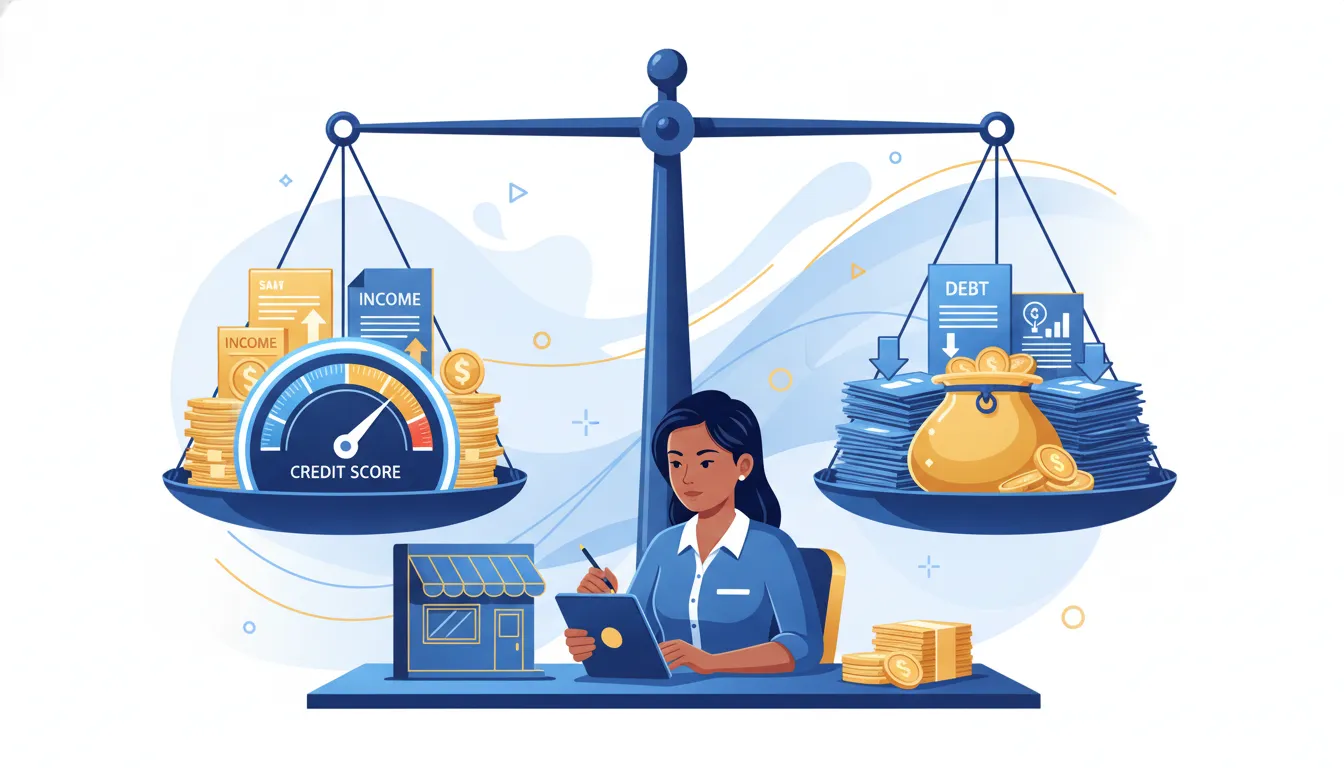
Monthly debt payments can matter just as much as your credit score when you apply for financing. Knowing how lenders compare these two measures can help you prepare a stronger application and avoid taking on a payment your budget cannot support.
Get started with M1 Credit Solutions to review and strengthen your credit profile before you apply.
The debt to income ratio vs credit score check is vital for anyone who wants to borrow money for a house or a new company. Your credit score shows how well you have paid back debt in the past. It looks at your payment history and how much credit you use. But the debt to income ratio shows if you can afford to take on a new loan right now. It compares your monthly debt costs to how much money you earn. Lenders often want to see a ratio below 35 percent. According to Experian, this ratio is a key part of home and big loans. Knowing both numbers helps you see your money health before you talk to a bank.
Lenders use these tools to build a map of your risk as a borrower. They both measure your trust but look at very different parts of your money. To prepare, you must understand the debt to income ratio vs credit score: the key difference. Start by learning what each measure tells a lender.
Debt to income ratio vs credit score: the key difference
When you apply for a loan, banks look at two main numbers to judge your money health. These are your credit score and your debt to income (DTI) ratio. While both help a lender pick to give you money, they track very different things. Your score tells a story of your past, while your DTI shows what you can afford right now.
What your credit score tracks
Your credit score is a three-digit number that shows how well you have paid back debt in the past. It tracks if you pay your bills on time and how much of your total credit you use. A high score means you are a safe bet for a lender. It shows you have a habit of paying back what you borrow. You can find more on how to fix your score at M1 Credit Solutions.
Lenders use this score to see the risk of giving you a loan. If your score is low, they might think you will not pay them back. This is why people with better scores often get lower rates. Your score is based on your credit report. This file lists your debts and payment past over many years.
What your DTI ratio tracks
Your debt to income ratio is a math problem. It looks at your monthly bills compared to your gross monthly income. As shown by the Consumer Financial Protection Bureau, this ratio helps lenders see if you have enough cash to pay for a new loan. It does not look at your past or how you pay. Instead, it measures your budget. It shows how much of your paycheck goes to debt each month.
A high DTI means a big part of your income already goes to other debts. This makes you a risk because you might not have enough money for a new bill. Even if you have a great credit score, a high DTI can cause a lender to say no. They want to make sure you can live and pay your bills without too much stress.
| Criteria | Credit Score | Debt to Income Ratio |
|---|---|---|
| What it tracks | Past payment habits and debt use | Monthly debt bills vs monthly income |
| How to find it | Checked on your credit report | Found with a simple math sum |
| Why it matters | Shows if you are a safe borrower | Shows if you can afford more debt |
| How to improve | Pay bills on time and lower debt | Pay off debts or earn more money |

How lenders use both measures
Lenders check both of these numbers to get a full view of your money life. The credit score tells them if you will pay, and the DTI tells them if you can pay. This is vital for big loans like a house or a car. For example, a small business owner might need to show both to get a loan for their firm. They want to see if your business cash flow can cover new debt along with your own personal bills.
Lenders often set caps on DTI ratios. If your ratio is too high, you might need a co-signer or a larger down payment. Good scores and ratios show you are low risk. This helps you get better terms and save money. You can find credit repair help to plan your next move.
How do lenders calculate debt-to-income ratio?
Lenders look at your debt-to-income ratio to see if you can afford a new loan. This number shows how much of your monthly pay goes toward debt. To find it, lenders divide your total monthly debt payments by your gross monthly income. Your gross income is what you earn before taxes are taken out. This check helps banks decide if you can handle more debt. It shows if you might struggle with monthly payments.
Two types of debt ratios
Banks often use two different ways to check your debt levels. The first is the front-end ratio. This only looks at your future housing costs, like your mortgage, tax, and insurance. The second is the back-end ratio. This adds up all your monthly bills, including car loans and credit card minimums. Most lenders focus more on the back-end ratio. It gives a full view of your money habits. This total check is a key part of how lenders weigh your debt to income ratio vs credit score when you apply for a loan.
Common debts used in the math
Not every bill you pay counts toward your debt ratio. Lenders look for recurring debts that show up on your credit report. These include car loans, student loans, and personal loans. They also include the minimum monthly payments on your credit cards. However, regular living costs usually do not count. You do not need to add your phone bill, food costs, or gas to this math. Lenders want to see your fixed debt load. They want to know if you have enough cash left over for a new loan payment.
Different limits for each loan
Every loan type has its own rules for how much debt you can have. For example, some mortgage programs allow a higher debt ratio than others. For a standard home loan, the maximum debt ratio is often about 36 to 45 percent. But some loans might let you go up to 50 percent if you have a high credit score. Other lenders, such as those for small business loans, may have stricter limits. They want to ensure your business cash flow can cover your debts. You can get credit repair assistance to help manage these debts and improve your odds.
A simple calculation example
You can find your own ratio with a simple bit of math. First, add up all your monthly debt bills. If you pay 1,500 dollars for rent, 300 dollars for a car, and 200 dollars for credit cards, your total debt is 2,000 dollars. Next, find your gross monthly pay. If you earn 6,000 dollars a month before taxes, you divide 2,000 by 6,000. According to the Consumer Financial Protection Bureau, your debt ratio would be 33 percent. Keeping this number low makes you a better candidate for new credit.
What does a credit score tell a lender?
Lenders use your credit score to see how you have handled money in the past. This three-digit number comes from the data in your credit report. It shows your track record of paying back loans and managing credit cards. A higher score tells a bank that you are a low-risk borrower. This often leads to better interest rates and higher loan amounts for your needs.
Measuring your risk as a borrower
A credit score acts as a quick way for a bank to see your past. It looks at your payment patterns over the last few years. If you pay your bills on time, your score will likely stay high. Lenders see this as a sign that you will pay them back too. A debt is an amount of money that you owe to a lender.
Your score also looks at the types of credit you use. This can include credit cards, car loans, and student loans. Banks like to see that you can manage many kinds of debt at once. They also look at how long you have had your accounts. A long record of good habits shows that you are a stable person to lend to over time.
Your credit report also shows how much of your credit limits you use. This is your credit utilization rate. If you use too much of your available credit, it might lower your score. Lenders worry that you are over-extended. They prefer to see that you have plenty of room left on your credit lines. This shows you have good control over your spending.
Difference between your score and ratio
It is vital to know that your debt to income ratio vs credit score are not the same thing. Your credit score tells a story about your past habits. It does not look at your job or how much you earn each month. On the other hand, your debt-to-income (DTI) ratio looks at your ability to pay. It compares your monthly debt costs to your gross monthly income.
Finding your DTI ratio is a simple step. You add up all your monthly debt payments. Then, you divide that total by your gross monthly income. This is the money you earn before taxes. For example, if you pay one thousand dollars in debt and earn four thousand, your ratio is twenty-five percent. Most lenders want to see this ratio stay below a certain level.
Lenders use the DTI ratio to see if you can afford a new loan payment. Even if you have a perfect score, a high DTI ratio can lead to a loan denial. This happens because the lender thinks your budget is too tight. They want to be sure you have money left over for other life costs. This balance is key for both personal loans and business funding.
Preparing for a loan application
When you apply for a loan, the lender will check both numbers. They want to see a low risk and a clear way to pay. You can work on your score by paying down credit card balances and fixing errors. If you need help with this, the M1 Credit Solutions home page has tools to get you started. Managing your debt levels is a long-term goal that helps your whole financial life.
You should also look for ways to lower your DTI ratio before you apply. This might mean paying off a small loan or asking for a raise. A lower ratio gives you more room to breathe in your budget. Lenders will feel more sure that you can handle a new monthly bill. It also helps you avoid the stress of being too deep in debt.
For small business owners, these numbers are even more important. Lenders often look at personal credit when a business is new. They want to see that the owner is careful with their own money. A low DTI ratio shows that the business cash flow will not be stressed by personal debts. This makes it easier to get the money you need to grow your company.
Can a good credit score offset a high DTI?
A strong credit score is a great tool for any borrower. It shows you have a history of paying back what you owe. But a high debt to income ratio vs credit score can still be a big hurdle. Lenders look at both of these numbers to see if you can take on more debt safely. Even if your score is near 800, a high DTI shows that most of your pay goes to old bills. This means you might not have enough cash left to cover a new loan payment.
A high score proves you are a safe bet, but it does not give you more money. If your monthly debts are more than half of what you earn, you are in a tight spot. Most banks will see this as a risk, no matter how good your past looks. They want to see that you have room in your budget for life’s costs and for the new loan you want to take out.
How credit scores help with loan terms
Your credit score tells lenders about your risk as a borrower. A high score can lead to low interest rates and better terms. It shows that you care for your credit accounts well and pay on time. Many lenders use this score to decide if they will work with you at all. If you are working on credit repair, you know how much a few points can change your options. But your score does not show how much money you make each month.
Lenders also need to know your power to pay. They want to be sure your income can handle the new monthly cost. This is why they check your debt-to-income (DTI) ratio with your score. The score shows your habit of paying, but the DTI shows your ability to pay today. Both parts are key for a clear view of your money health. If one is weak, you may need to spend time fixing it before you apply for a big loan.
When a strong score meets high debt
A good credit score can help in some cases, but it rarely hides a high DTI. For example, some home loan plans allow for a slightly higher DTI if you have a great score and large savings. These are often called “compensating factors.” A lender might feel safer giving you a loan if you have cash in the bank to cover a few months of payments. However, most standard loans have strict caps on how much debt you can carry at one time.
The Consumer Financial Protection Bureau notes that a 43 percent DTI is often the highest ratio allowed for a qualified mortgage. If you are above this mark, even a perfect credit score may not be enough to get a loan. Lenders worry that any small change in your income could lead to a missed payment. In these cases, it is often better to pay down credit card debt or other loans before you try to buy a home.
Other factors that lenders review
Lenders do more than just compare your debt to income ratio vs credit score. They also look at your job history and how steady your income is. If you have been at the same job for many years, they may feel more at ease. They also check the type of loan you want. Some loans, like those for a car or a home, use the item itself as collateral. This can make a lender more willing to take a risk on a borrower with a higher DTI ratio.
Your down payment amount also plays a big role in their choice. Putting more money down reduces the amount you need to borrow. This lowers your monthly payment and improves your DTI in the eyes of the bank. Small business owners often face even tighter checks. Lenders will look at both personal and business debt to ensure the cash flow is strong. Balancing your credit score with a low DTI is the best way to show you are ready for a new deal.
What small business lenders may review
When you apply for business funding, lenders look at a few things to decide if you can pay back the debt. Because every bank and online lender has its own rules, their reviews can vary. But most will look at your personal money and your business records to get a full view of your risk level.
Personal credit and owner guarantees
Small business lenders often start by checking the owner’s personal credit score. This is common for new firms that do not have a long credit history of their own. A high personal score shows that you pay your own bills well. This gives the lender more trust. You can use tools from M1 Credit Solutions to help build and manage your profile before you apply for a loan.
Many lenders also ask for a personal guarantee. This means you agree to be the one to pay the loan if your business cannot. Lenders use this to lower their risk. They want to know that you are fully tied to the success of the business. The U.S. Small Business Administration notes that lenders check both the owner’s personal reports and the company’s business credit files.
Business cash flow and debt capacity
Lenders will review your business cash flow to see if you have enough money coming in to cover new loan payments. They often check a debt service coverage ratio (DSCR). This number compares your net income to your total debt. A higher ratio is better. It shows your business has a safety net after paying all its bills. Most banks look for a ratio of 1.25 or more to be sure you can handle the extra cost of a new loan.
Your business debt to income ratio is another key part of the review. While your credit score shows how you manage debt, your debt to income ratio shows how much debt you can afford. Lenders want to see that your old debts do not take up too much of your monthly sales. If your debt to income ratio vs credit score shows high risk in either area, a lender might ask for more assets to back the loan.
Time in business and revenue
How long you have been in business matters to most lenders. Many banks like to see at least two years of work. This history proves that your business model is stable and can last. New firms may find it harder to get low-rate loans. But they can still get credit repair assistance and other tools to help start their first business credit profile.
Revenue is the final piece of the puzzle. Lenders review your tax forms and bank records to check your annual sales. They use this data to set your loan limit. They want to be sure that the business makes enough profit to stay healthy while repaying its lenders. Since rules differ by bank, it is helpful to keep your records ready for a deep review.
How to prepare both numbers before applying

Preparation works best when you treat your credit score and debt-to-income ratio as separate checkpoints. One shows how you have managed reported credit, while the other shows how much room your current budget may have for another payment.
- Review your credit reports. Check the accounts, balances, payment status, and personal details shown on each report. If you find inaccurate information, use the credit bureau’s dispute process and keep supporting records.
- Calculate your current DTI. Add the monthly debt payments a lender is likely to count, then divide that total by your gross monthly income. Repeat the calculation using the expected payment for the financing you are considering.
- Build a complete income file. Gather recent pay records, tax documents, bank statements, and other documentation a lender requests. Small business owners may also need business tax returns, profit-and-loss statements, and proof of revenue.
- Reduce balances where practical. Paying down revolving balances may lower required monthly payments and can also affect credit utilization. Keep an emergency cushion rather than using every available dollar solely to change an application metric.
- Avoid unnecessary new applications. Opening new accounts or adding payments shortly before applying can change both your credit profile and DTI. Ask prospective lenders whether they offer a prequalification process and how it affects your credit.
- Compare lender requirements. Underwriting criteria vary by loan product and lender. Ask what documentation, score range, DTI calculation, collateral, or business history may be reviewed before submitting a full application.
These steps cannot guarantee approval or a particular rate. They can help you understand your position, correct avoidable mistakes, and choose a financing option that better fits your ability to repay.
Explore credit repair help from M1 Credit Solutions before your next financing application.
Frequently Asked Questions
Does your debt-to-income ratio affect your credit score?
No, your debt to income ratio does not change your credit score. Credit firms do not put your pay on your credit report. This means that credit scores do not use your income in their math. While your score shows if you pay on time, your income stays apart. Lenders look at both of these things, but they are not the same.
What is a good debt-to-income ratio for a loan?
As shown by Experian, most lenders want a debt to income ratio of 35 percent or lower. This total usually counts your house payment and all other debt bills. If you do not have a house loan, banks often look for a ratio of 20 percent or less. Keeping this number low shows you have enough cash to pay for new loans. It helps show you can handle more debt without stress.
Can you have a good credit score and a high debt-to-income ratio?
Yes, you can have a high credit score and a high debt to income ratio at the same time. You might pay every bill on time, which gives you a top score. But you might still have big monthly debt bills compared to what you earn. Lenders check both of these numbers to see if you can take on more debt. They want to make sure you have the cash to pay them back.
How can you improve your debt-to-income ratio fast?
The fast way to lower your debt ratio is to pay down your debts. You can focus on loans with the high monthly costs. One more way is to earn more money each month. A higher income will lower your ratio even if your debt stays the same. Most people find that paying off a small loan with a big bill helps the most. This frees up cash and makes your ratio better for a bank.
Get ready to borrow with a clearer plan
Your credit score and debt-to-income ratio tell different parts of your financial story. Knowing both before you apply can help you spot issues, ask better questions, and approach financing with realistic expectations.
Get started with M1 Credit Solutions to explore accessible tools and education for building stronger personal and business credit habits.