
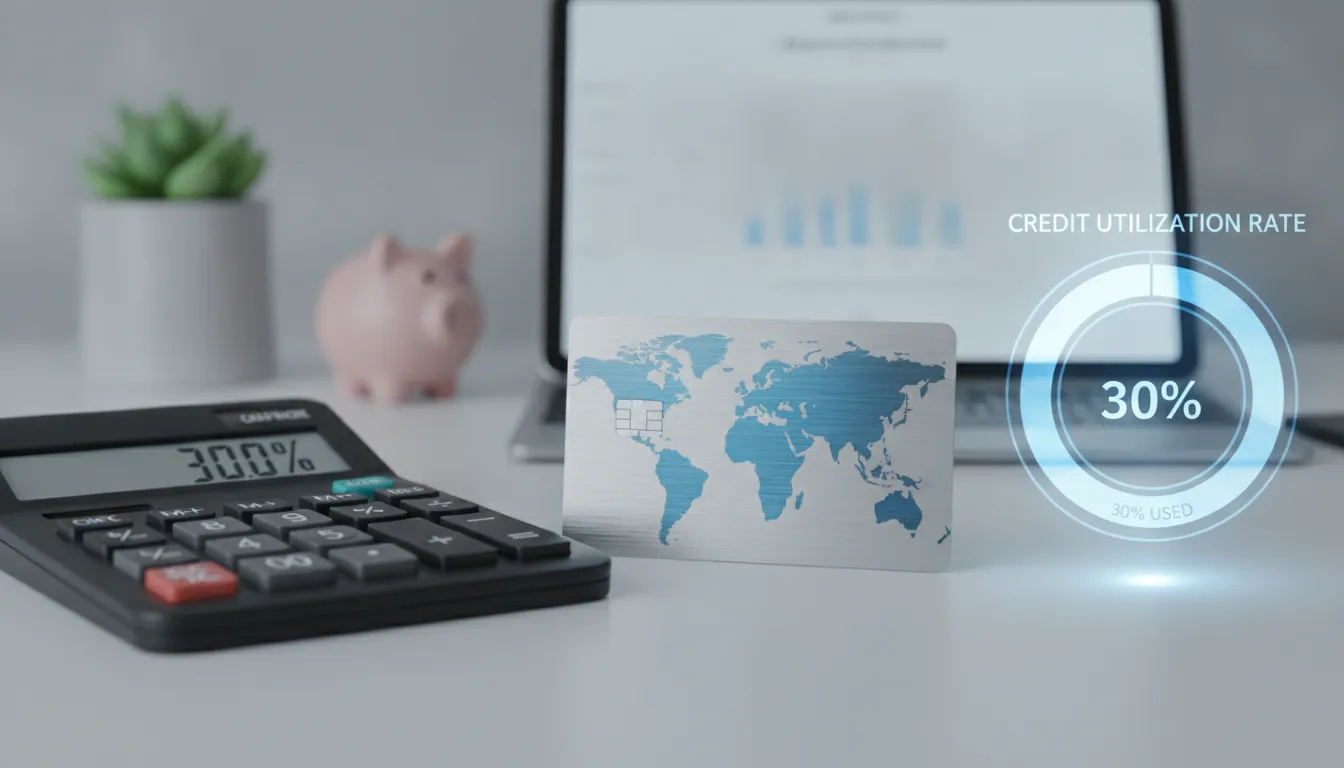
High credit card balances can sink your credit score even if you pay every bill on time. This happens because lenders track how much of your limit you use each month. Lowering this percentage is the fastest way to see a score increase.
Ready to fix your credit today? Call (833) 261-2677 for your free credit evaluation from M1 Credit Solutions.
Your credit utilization ratio measures the amount of revolving credit you use compared to your total credit limits. It accounts for 30% of your FICO score, making it the second most important factor after payment history. Most experts recommend keeping this ratio below 30%, with the best scores coming from those under 10%.
What Is a Credit Utilization Ratio and Why Does It Matter for Your Score?
Credit utilization compares your total credit card balances to your total credit limits. A lower percentage signals to lenders that you manage debt responsibly. Since this factor updates monthly, lowering your ratio is one of the fastest ways to improve your FICO score.
Your credit utilization ratio measures how much of your credit you use. It looks at your revolving credit, like credit cards and lines of credit. This ratio is a big part of your credit health. It shows lenders if you use too much of your limits. If you carry high balances, it tells banks you may have money stress. Keeping this number low is a fast way to help your credit health. M1 Credit Solutions recommends tracking this number as a key part of any credit repair plan.
Steps to find your ratio
The math for this ratio is easy. You take your total credit card balances and divide them by your total credit limits. Then you multiply that number by 100 to find the percent. For example, if you have a $1,000 limit and owe $300, your ratio is 30%. You can see more on how credit utilization affects your score in our guide. Note that Equifax reports that both your total ratio and the ratio on each card matter. Even one card with a high balance can pull your score down.
Scoring impact and the 30% rule
The FICO scoring model puts a lot of weight on your debt. This factor makes up 30% of your FICO score. This part of your score is second only to your payment past. It is a key thing to know when you learn what affects your credit score most. Most experts say you should keep your ratio below 30%. But to get the best scores, you should stay under 10% on every card. This helps you look like a safe user to banks.
| Credit Utilization Range | Score Impact Level | Typical FICO Score Range |
|---|---|---|
| 1% – 9% | Optimal | 750 – 850 |
| 10% – 29% | Good | 700 – 749 |
| 30% – 49% | Moderate Risk | 650 – 699 |
| 50% – 74% | High Risk | 600 – 649 |
| 75% – 100% | Severe Impact | Below 600 |
Benefits of a low balance
You might think that a 0% ratio is the best. But that is not always the case. Scoring models like to see that you use your cards and pay them back on time. If you show a 0% balance on every card, it can look like you do not use credit at all. This might cause your score to stay flat or even go down. A small balance between 1% and 9% often helps your score more than 0%. It shows you are an active user who can handle debt well. This is a key step to improve your credit score over time.
Why Does Paying Down Balances Lower Your Credit Utilization Ratio Fast?
Paying down credit card debt directly reduces the numerator in your utilization calculation. Every dollar you pay off lowers the total balance reported to credit bureaus. This is often the fastest method to improve your score because the change takes effect on the next billing cycle.
Paying down your debt is the fastest way to lower your credit utilization ratio. Every dollar you pay off reduces the total amount you owe. This change helps your credit score because it lowers the top number in your usage rate. When that number goes down, your score often goes up. If you want to improve your credit score step by step, you should start with your card balances.
The Priority List for Credit Card Payments
Not all credit card debt impacts your score the same way. Your total usage across all cards matters, but so does the usage on each card. If you have one card that is almost full, it can hurt your score even if your other cards are empty. This is why you must pick which cards to pay first. You should focus on the accounts that are closest to their limits.
Targeting these cards first is a smart move. It helps clear the biggest red flags on your credit report. When a card is maxed out, it signals to lenders that you may be in financial trouble. By lowering that balance, you show that you can manage your credit limits well. This focus is a key part of how credit utilization affects your score over time. M1 Credit Solutions helps you identify which cards to target first through its AI-powered credit analysis.
- List all your credit cards with their current balances and credit limits.
- Find the usage for each card by dividing the balance by the limit.
- Find the card with the highest rate and put any extra money toward it.
- Make the minimum payments on your other cards to keep your accounts in good standing.
- Once the first card is below 10% usage, move to the card with the next highest rate.
Frequent Payments and Statement Dates
Most credit card companies tell the credit bureaus about your balance once a month. They usually send this data on your statement closing date. If you wait until the due date to pay, the bureau might see a high balance even if you pay it off in full. Making many payments each month helps solve this timing problem.
You can make a payment every time you get a paycheck. This keeps your balance low throughout the billing cycle. It also ensures that the balance shown to the bureaus is as small as possible. Many experts at Experian suggest this method to keep your ratio low. It is a simple way to boost your score without spending less money.
This strategy also helps you avoid interest charges if you pay the full balance. It creates a habit of checking your accounts often. When you see your balances drop, you feel more in control of your money. This sense of power is vital when you work to fix your credit for the long term.
How Can a Credit Limit Increase Lower Your Credit Utilization Ratio?
Requesting a higher credit limit reduces your utilization ratio without requiring you to pay down any debt. A higher limit increases the denominator in the calculation, so your existing balance represents a smaller percentage of your total available credit.
One of the best ways to lower your credit utilization ratio is to ask for a higher credit limit. This move works because it changes the math of your score. When your limit goes up, your balance stays the same, but the total credit you use goes down. This shows banks that you can manage more credit without spending all of it. M1 Credit Solutions advises clients to explore this option before applying for new credit cards.
How a higher limit helps your ratio
Your credit use looks at how much of your total limit you spend each month. If you have a card with a $2,000 limit and a $1,000 balance, your ratio is 50%. This is well above the 30% goal most experts set. If your bank gives you a credit limit boost, that same balance now takes up a smaller part of your line. You can read more about how your credit utilization ratio works from Investopedia.
The main gain here is that you fix the bottom number of your ratio. You can help your score without needing to pay off your debt right away. You should still work on building good credit habits to keep your score high. But a higher limit can give you a quick win while you work on your long-term plan.
Soft pulls versus hard pulls
Before you ask for more credit, you should know how it affects your report. Some banks use a soft pull to check your credit. A soft pull does not hurt your score at all. Other banks might do a hard pull. A hard pull can drop your score by a few points for a short time. It is a good idea to ask your bank which type of check they will do first.
Many people like a soft pull because it is safe for their score. If your bank only does a hard pull, you may want to wait until your score is strong. You can read more about a credit limit increase and how pulls work from NerdWallet. This helps you avoid any bad hits to your credit report. If you are not sure, you might wait for the bank to give you an increase on its own.
When to make the request
Timing is a big part of your plan when you ask for more credit. Most banks want to see at least six months of on-time payments first. They also like to see that you use the card often and pay it back. If you have a past with late payments, the bank might say no. It is best to wait until your report is clean and your score is steady. Banks often look at a few things before they say yes.
- Your past payment history
- How much money you make each year
- How often you use the credit you have
Sometimes, your bank might give you a boost without you even asking. These happen when the bank sees you are a safe user. They look at your past payments and your new income. Just be careful not to spend more just because your limit is higher. Keeping your spending low is the only way to keep your credit utilization ratio in a good spot.
Why Pay Your Balance Before the Statement Date Instead of the Due Date?
Paying before your statement closing date ensures a lower balance is reported to the credit bureaus. Since most lenders report the statement balance, paying early makes your utilization appear lower than waiting until the actual due date to pay.
Many people believe that paying a credit card bill on time is the only thing that matters. While on-time payments are key, the date you send your money is just as vital for your credit utilization ratio. This plan is the fastest way to see a jump in your credit score without needing a new account or a pay raise.
Timing your payment for the bureaus
Credit card banks do not tell the bureaus what you owe every day. Instead, they report the balance shown on your monthly statement when the billing cycle ends. If you wait until the due date to pay your bill, the bank has likely already reported a high balance. This makes it look like you are using a lot of your credit even if you pay the full debt just a few days later.
To fix this, aim to pay your balance down a few days before the statement closing date. You can find this date on your bill or in your bank app. As noted by Equifax, bureaus receive the balance that is on your statement on that exact cut date. By paying early, you ensure the bank reports a very low number to the bureaus, which can help your score right away.
The power of the 10 percent rule
When you pay before the statement date, your goal is to get your balance as low as you can. Experts often suggest keeping your use under 30 percent, but the best scores go to people who stay under 10 percent. Paying your card down to a small amount like $20 before the statement cuts is a smart move. This shows that you have credit and use it well, but you do not rely on it too much.
This method works fast because your credit score does not track past use. Once the bank reports a lower balance, your score can jump in just 30 to 45 days. If you need to improve your credit score fast for a loan, this is the first step you should take. It is a simple shift in timing that can have a big impact on your credit score.
How the math works in real life
Think about how this change affects your numbers. Think of a credit card with a $5,000 limit and a $2,000 balance. In this case, your use is at 40 percent, which is high enough to pull your score down. If you wait for the statement to close, the bank will report that 40 percent rate, and your score will not go up.
Now, think if you pay $1,700 toward that card three days before the statement date. When the cycle ends, your new reported balance is only $300. This drops your use to just 6 percent. Because this new low balance is what the bureaus see, your score will get a boost during the next reporting cycle. This plan works well because it lowers the top number in the credit math without you needing to change your spending habits.
Do Balance Transfers Help Reset Your Credit Utilization Ratio?
Balance transfers can lower your utilization by spreading debt across multiple cards and increasing your total available credit. Opening a new card with a 0% intro APR gives you time to pay down the balance without accruing interest, but watch for transfer fees.
A balance transfer card can help you manage a high credit utilization ratio by moving debt to a new account. When you open a new credit card, your total credit limit grows. This change adds to the bottom number of your ratio math, which can help your credit score right away.
Add to your total credit limit
Opening a new card for a transfer helps your score in two ways. First, the new account adds to your total credit. Second, many transfer cards offer a 0% intro rate for 12 to 21 months. According to NerdWallet, this interest-free window gives you a clear path to pay off the debt without new costs piling up.
By moving a large balance from a card that is near its limit, you also lower the use on that card. This is helpful because most credit scoring models look at both your total ratio and the ratio on each card you own. Keeping every card well under its limit is a key part of building good credit habits.
Watch out for transfer fees
Most banks charge a fee to move your debt to a new card. This fee is usually about 3% to 5% of the total amount you move. For instance, moving a $5,000 balance with a 5% fee adds $250 to your debt. You should check if the money you save on interest is more than the cost of the fee before you start.
Applying for a new card also leads to a hard credit check. A hard inquiry can drop your credit score by 5 to 10 points. Also, a new account will lower the average age of all your credit accounts. While these parts might cause a small, short-term dip, the long-term gain from a lower credit utilization ratio often beats the first loss.
Pay off the balance fast
The goal of a balance transfer is to pay off the debt, not just move it. You should only move an amount that you can pay back before the 0% intro time ends. If you still have a balance when the intro rate stops, the interest rate will jump to the standard APR. Some cards may even charge deferred interest if the full amount is not gone in time.
To get the best results, stop using the old card once the balance is gone. If you start spending on the old card again, your total debt will grow, and your ratio will climb back up. Use the interest-free months to focus every extra dollar on your goal of a lower credit utilization ratio.
Why Should You Keep Old Credit Cards Open to Protect Your Ratio?
Closing old credit cards removes their credit limits from your total available credit, which increases your utilization ratio. Even unused cards help your score by keeping your total credit limit high. Consider a product change to a no-fee card instead of closing an account.
When you try to improve your credit score fast, you might think closing an old card helps. You might feel that getting rid of a card you do not use is a good way to clean up your wallet. But closing an old card can hurt your score by changing your credit utilization ratio. This happens because closing a card removes its limit from your total available credit. According to Investopedia, this move makes your total debt look like a larger part of your limits.
The power of the denominator
Your ratio comes from a simple math problem: your total debt divided by your total credit limits. When you close a card, that limit is gone. Your debt stays the same, but your total limit goes down. This makes your ratio go up, even if you do not spend a single extra dollar. The experts at Experian show that even unused cards help you. These old cards keep your total limit high. This helps your ratio stay low.
Handling annual fees
You may want to close a card because it has a high annual fee. If you do not use the perks, you might feel the cost is not worth it. Instead of canceling, you should ask your bank for a product change. This lets you move to a version of the card with no fee. As noted by Bankrate, this keeps your account history and limit intact. It is a smart way to avoid a score drop while saving money each year.
Preserving your credit history
Old cards also help the age of your credit. If you are learning how to build credit from scratch, you know that time is key. Older accounts show banks that you have a long track record of handling debt. Keeping these cards open proves you can manage credit over many years. If you must stop using a card, keep it in a safe place at home instead of closing it. This keeps your score safe while you work to fix your credit score through better habits.
How M1 Credit Solutions Helps You Take Control of Your Credit Utilization Ratio
M1 Credit Solutions provides AI-powered tools that scan your credit reports, identify high utilization patterns, and generate dispute letters for errors. For $29.99 a month, you get automated credit repair support across all three bureaus with real-time score tracking.
Knowing how to lower your credit utilization ratio is just the first step. The hard part is doing the work to fix errors and track your gains. M1 Credit Solutions gives you an AI-powered way to manage this process. For just $29.99 a month, you get tools to help you start your free credit evaluation and build a better score. Our platform turns a complex task into a simple plan that works for you.
AI tools for 3-bureau credit repair
You do not have to fight credit bureaus on your own. Our AI engine scans your reports from all three bureaus to find issues that hurt your score. It looks for errors in your reported balances or accounts that should not be there. If it finds a mistake, the system writes a custom dispute letter for you. You do not need to be an expert to get results. This tool handles the heavy lifting so you can focus on your life.
Our AI platform includes several key features to help you succeed:
- Full checks of reports from all three major bureaus.
- AI-made dispute letters for errors and late payments.
- Step-by-step guides to help you lower your debt.
- Real-time tracking of score changes and point gains.
Track your score and progress in real time
Credit repair is a long race, not a quick dash. Most people see their first score gains in 60 to 90 days after they start a consistent plan. M1 Credit Solutions helps you track every change to your credit reports and scores through a user-friendly dashboard. You get alerts when your utilization ratio drops or when a dispute resolves in your favor. This real-time feedback keeps you motivated and informed throughout your credit repair journey.
Peace of mind with identity theft insurance
Your credit health is about more than just your score. M1 Credit Solutions also offers identity theft insurance with every membership. This coverage protects you if someone opens accounts in your name or uses your personal details without permission. It adds a layer of security that gives you confidence while you work to improve your credit utilization ratio and overall financial profile.
Frequently Asked Questions
What is a good credit utilization ratio for high scores?
Keeping your ratio below 30 percent is a good start for most people. But the best credit scores often go to those who keep their use under 10 percent. Based on a report from Experian, banks like to see that you do not rely too much on debt. Keeping this number low is one of the best ways to improve your credit score over time.
Does credit utilization have a memory of past high balances?
No, the current FICO scoring models do not have a memory for this ratio. This means your score only looks at the most recent debt your banks report. If you had high debt last month but pay it off now, your score will go up as soon as the bureaus get the update. As noted by Investopedia, it does not matter how much you owed in the past as long as you pay it now.
How does maxing out one card affect my credit score?
Even if your total debt is low, maxing out a single card can hurt your score. Scoring models look at both your total use and the use on each card. A single card with a high balance signals risk to banks. Based on data from Equifax, you should try to spread your spending across cards. It is also wise to pay down any card that is close to its limit as soon as you can.
Does zero percent utilization help my credit score?
While low debt is good, having a zero percent ratio may not be the best choice. Credit models like to see that you use your cards and pay them back. A small balance of one or two percent often results in a better score than no use at all. This shows you are an active user who has good credit habits. It proves to banks that you can be trusted with credit.
Ready to lower your credit utilization ratio today?
Keeping a high credit use ratio can stop you from getting a home loan or a new car. If you wait to act, high rates will keep eating your monthly budget and make it hard to get ahead. This cycle often feels like it will never end, but you can take steps to break free right now.
You can improve your credit score fast by using the right tools to lower your debt ratios. Most people see their first results in 60 to 90 days once they start a clear plan and stick to it. M1 Credit Solutions gives you the AI tools you need to do the work so you can reach your goals without the stress of doing it alone. You have the power to fix your credit and we are here to help you every step of the way.
Ready to start your free credit evaluation? Call (833) 261-2677 now and let M1 Credit Solutions help you lower your credit utilization ratio today.