
Does Rent Reporting Build Credit?
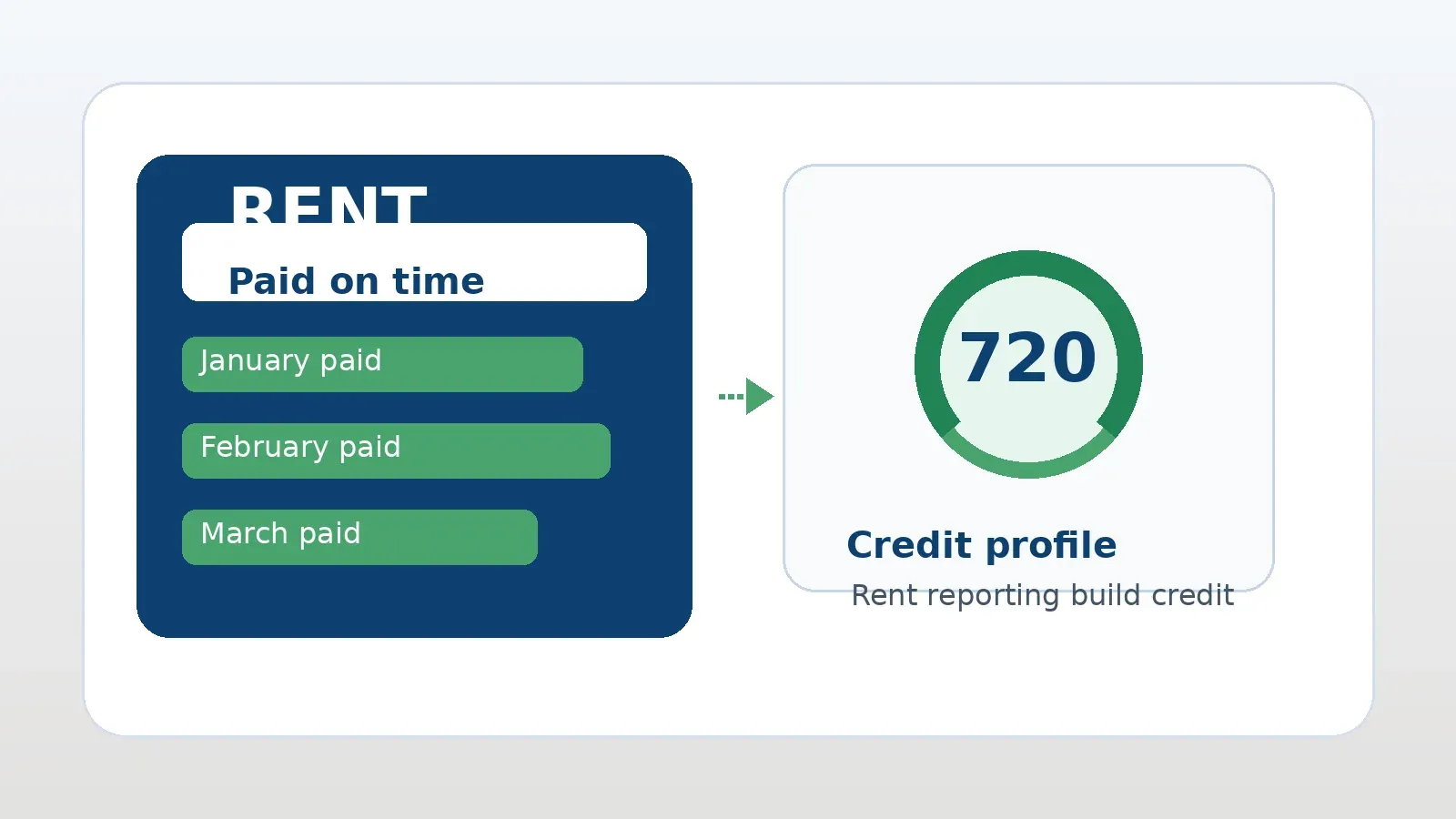
Rent reporting build credit strategies can be useful if you pay rent on time but those payments never show up on your credit reports. For many renters, monthly rent is the largest bill they pay, yet it often does not count toward their credit profile unless a landlord, property manager, or rent-reporting service sends the data to one or more credit bureaus. The right setup can add positive payment history, but it is not a magic fix and it does not replace a full credit-building plan.
This guide explains how rent reporting works, which credit bureaus may receive your rent data, who is most likely to benefit, what fees and verification rules to watch for, and how to fit rent reporting into a broader credit repair and credit-building plan.
Quick Answer: Can Rent Reporting Help Build Credit?
Yes, rent reporting can help build credit when your on-time rent payments are reported to a credit bureau and used by the credit scoring model reviewing your file. It may be especially helpful for renters with a thin credit file, limited credit history, or damaged credit who need more positive payment activity on their reports.
The benefit depends on several factors:
- Which credit bureaus receive the rent data
- Whether the scoring model includes rental payment history
- How long and how consistently rent is reported
- Whether your existing credit file has negative items that outweigh the new positive data
- Whether the service reports only positive payments or also late payments
Rent reporting is best viewed as one tool, not the whole solution. If your credit report also contains collections, charge-offs, late payments, high credit utilization, or inaccurate information, you may need a broader plan. M1 Credit Solutions helps consumers review their credit reports, understand what is hurting their scores, and take organized action through an AI-powered DIY credit repair platform.
How Rent Reporting Services Work
Traditional credit accounts, such as credit cards, auto loans, student loans, and mortgages, are usually reported by lenders. Rent is different. Many landlords collect rent but do not send monthly payment data to Experian, Equifax, or TransUnion. A rent-reporting service fills that gap by verifying your rent payments and sending the payment history to one or more bureaus.
The basic process usually looks like this:
- You enroll with a rent-reporting provider. This may be offered by your landlord, property management company, rent payment platform, or a third-party service.
- The provider verifies your lease or payment relationship. You may need to provide your name, address, lease information, payment records, bank account connection, or landlord contact details.
- Your payment history is reviewed. Some services report only future payments. Others may report past rent payments after verifying them.
- The service sends data to credit bureaus. The reported data may appear as a rental tradeline or payment history on your credit report.
- Scoring models may use the data. Newer scoring models may consider rent data when calculating scores, but not every lender uses the same model.
That last point matters. You can have rent payments on a credit report and still see different results depending on the credit score being checked. Some versions of FICO and VantageScore are more likely to consider alternative data such as rent. Some older scoring models may ignore it or weigh it differently.
Which Credit Bureaus May Receive Rent Data?
Rent-reporting services vary. Some report to one credit bureau. Others report to two or all three major bureaus. Before you sign up, confirm exactly where the service sends your rent data.
| Credit bureau | What to ask before enrolling |
|---|---|
| Experian | Does the service report rental payments directly to Experian, or does it use a tool such as Experian Boost? |
| Equifax | Will both current and past rent payments be reported, or only future payments? |
| TransUnion | Does the rental tradeline appear on TransUnion reports and how often is it updated? |
Do not assume that every rent-reporting company reports to all three. If you are planning to apply for a mortgage, auto loan, apartment, or credit card, ask which bureau and scoring model the lender or screening company is likely to use. That can help you decide whether the cost of a rent-reporting service makes sense.
You should also keep checking your reports. If you are not sure how to review them, read M1’s guide on how to check your credit report for free. Rent reporting only helps if the information is accurate, connected to the right person, and actually showing on the reports that matter.
Who Benefits Most From Rent Reporting?
Rent reporting tends to be most useful for people who need more positive account history. If your credit file is thin, meaning there are few or no active accounts reporting, adding a consistent rental payment record may help show responsible payment behavior.
You may be a strong candidate if you:
- Pay rent on time every month
- Have little or no credit history
- Are rebuilding after collections, charge-offs, bankruptcy, or past late payments
- Have few positive tradelines on your reports
- Want to prepare for an apartment, auto loan, mortgage, or credit card application
- Need a credit-building tool that does not require taking on new debt
Rent reporting may be less helpful if you already have several strong accounts with long payment histories, low balances, and no negative items. It may also have limited impact if major derogatory items are still pulling your profile down. For example, if your reports show recent missed payments or high card balances, rent reporting can add positive activity, but it may not overcome those issues by itself.
If you are starting with very little credit, combine rent reporting with other responsible credit-building steps. M1’s guide to a thin credit file and building credit from scratch explains how to create a stronger foundation without rushing into the wrong products.
How Much Can Rent Reporting Improve a Credit Score?
There is no guaranteed score increase. Some renters may see a noticeable improvement, some may see a small change, and others may see no change at all. Credit scores depend on the entire credit file, not just one new data point.
Several things influence the outcome:
- Payment history strength: A long record of on-time rent payments is more helpful than one or two months of data.
- Credit file thickness: Rent reporting often matters more when there are few other positive accounts.
- Negative information: Recent late payments, collections, and charge-offs may reduce the visible benefit.
- Scoring model: Some models include rental data, while others may not.
- Bureau coverage: If your rent data reaches only one bureau, scores based on other bureaus may not change.
Be careful with any company that promises a specific point increase. Credit improvement is personal. A more realistic goal is to use rent reporting to add verified positive history while also working on the other factors that affect your credit score.
For a broader view of score factors, review M1’s guide on what affects your credit score. Payment history is important, but credit utilization, account age, credit mix, inquiries, and negative marks can all play a role.
Fees, Landlord Participation, and Verification Rules
Rent reporting can be free, low cost, or surprisingly expensive depending on the provider. Some rent payment platforms include reporting at no added cost. Other services charge a setup fee, monthly fee, fee for past payment reporting, or extra fee to report to all three bureaus.
Before enrolling, ask these questions:
- What is the monthly cost?
- Is there an enrollment or setup fee?
- Does it cost extra to report past rent payments?
- Which bureaus receive the data?
- Does the service report late payments or only positive payments?
- Can roommates be reported separately?
- What happens if you move?
- How do you cancel?
- How long does it take for the tradeline to appear?
Landlord participation also matters. Some services require your landlord or property manager to confirm your lease and payments. Others verify payments through bank records or rent payment platforms. If your landlord does not participate, you may need a provider that can verify your payments another way.
Also check the late payment policy. A service that reports late rent could hurt your credit if you fall behind. If your income is unstable or rent payments are sometimes late, think carefully before enrolling. Credit building works best when the reported activity is consistently positive.
Rent Reporting vs. Other Credit-Building Tools
Rent reporting is attractive because it uses a bill you already pay. You are not opening a new credit card, taking a loan, or adding debt. Still, it should be compared with other tools that may also help build credit.
| Tool | Potential benefit | Key risk or limitation |
|---|---|---|
| Rent reporting | Adds on-time rent history without new debt | May not be used by every scoring model |
| Secured credit card | Can build revolving credit history and improve mix | High utilization or missed payments can hurt |
| Credit-builder loan | Can add installment payment history | Fees and loan terms vary |
| Authorized user account | May add positive account history from someone else’s card | Only helps if the account is well managed and reported |
| Credit repair disputes | Can address inaccurate, outdated, or unverifiable negative items | Legitimate negative items may remain until they age off |
For many people, the best path is a combination. Rent reporting can add positive payment behavior. A secured card can help establish revolving credit if used carefully. Reviewing reports can uncover inaccurate items that may be disputed under the Fair Credit Reporting Act. Paying down balances can improve utilization. The right mix depends on what is currently holding your score back.
If you are comparing ways to improve faster, read M1’s guide on how to improve your credit score fast. It explains why some actions may help quickly while others take time.
How to Choose a Rent-Reporting Service
Do not choose a rent-reporting provider based only on a bold score claim. Use a checklist. The right service should be transparent about cost, bureau coverage, verification, cancellation, and how it handles negative information.
1. Confirm bureau coverage
Ask whether the service reports to Experian, Equifax, TransUnion, or all three. If it reports to only one bureau, that may still help, but it is less comprehensive.
2. Read the fee schedule
Calculate the annual cost, not just the monthly cost. A $7 monthly fee may be reasonable. A setup fee, past-reporting fee, and monthly subscription can add up quickly.
3. Understand what gets reported
Some services report only on-time payments. Others may report late payments. If late payments are possible, make sure you understand the risk.
4. Check verification requirements
Find out whether your landlord must participate. If you pay by cash, money order, or informal transfer, it may be harder to verify your history.
5. Watch for unrealistic promises
No rent-reporting provider can honestly guarantee a specific score increase for everyone. Look for clear explanations rather than hype.
6. Plan for your next credit goal
If your goal is a mortgage, auto loan, credit card, apartment approval, or business funding, think about the full profile that decision-makers will review. Rent reporting may help, but it may not solve collections, high balances, or inaccurate personal information.
If you were denied an apartment because of credit, review the screening decision and any report errors before relying on rent reporting alone.
How Rent Reporting Fits Into a Broader Credit Plan
The strongest credit-building plans start with a clear report review. Before paying for rent reporting, look at all three credit reports and identify what is helping and what is hurting. You may find inaccurate addresses, duplicate collections, outdated accounts, balances reported incorrectly, or negative items that need a closer look.
From there, build a simple action plan:
- Verify your reports. Review Experian, Equifax, and TransUnion for accuracy.
- Protect payment history. Pay all current accounts on time, including rent if you plan to report it.
- Lower high balances. Credit utilization can have a large effect on scores.
- Dispute inaccurate information. Use organized, legally sound disputes when items are wrong, outdated, or unverifiable.
- Add positive accounts carefully. Rent reporting, secured cards, credit-builder loans, and responsible authorized user accounts may help when used correctly.
- Track progress. Credit improvement takes consistency, not guesswork.
M1 Credit Solutions was built for people who want control, clarity, and affordability. The platform helps users connect their credit reports, identify issues, generate customized AI-powered dispute letters, and track progress without relying on expensive traditional credit repair agencies. It is designed for consumers who want to understand the process, take action, and build better financial options over time.
Common Mistakes to Avoid
Rent reporting is simple in concept, but the wrong expectations can lead to frustration. Avoid these common mistakes:
- Assuming rent automatically appears on your credit report. It usually does not unless someone reports it.
- Paying for a service without checking bureau coverage. One-bureau reporting may not match your goals.
- Ignoring negative items. Rent reporting may help, but unresolved credit report problems can still hold you back.
- Overlooking late payment policies. Reporting late rent could damage your profile.
- Expecting every lender to use rental data. Lenders use different score versions and underwriting rules.
- Skipping report monitoring. Always confirm that the reported information appears correctly.
If your reports include collection accounts, start with education before taking action. M1’s guide on how to remove collections from a credit report explains how collections work and what options may exist when information is inaccurate or unverifiable.
FAQ About Rent Reporting and Credit
Does rent reporting build credit if I have no credit history?
It can help, especially if the rent data is reported to a bureau and used by the scoring model. People with thin files may benefit because positive rental history can add payment activity. You may still need other credit-building tools to create a stronger profile.
How long does rent reporting take to show on a credit report?
Timing varies by provider and bureau. Some services may take 30 to 60 days or longer for information to appear. Past rent reporting may take additional verification time.
Can rent reporting hurt my credit?
It depends on the provider’s policy. If only positive payments are reported, the risk is lower. If late payments are reported, missed or late rent could hurt your credit. Always read the terms before enrolling.
Do all credit scores count rent payments?
No. Some newer scoring models may consider rental payment history when it is on your credit report. Some older or lender-specific models may not use it. That is why rent reporting can help in some situations but not in every credit decision.
Is rent reporting better than a secured credit card?
They serve different purposes. Rent reporting may add payment history without new debt. A secured credit card can build revolving credit history, but it must be used carefully. Many people use more than one tool as part of a broader plan.
Bottom Line: Use Rent Reporting as Part of a Smart Credit Strategy
Rent reporting can be a practical way to turn an existing monthly bill into positive credit history. It may be especially valuable for renters with thin credit, limited positive accounts, or a rebuilding goal. The key is to understand the limits. Bureau coverage, scoring models, fees, landlord participation, verification rules, and late payment policies all matter.
The smartest move is to connect rent reporting to a complete credit plan. Review your reports, address inaccurate information, protect on-time payments, manage utilization, and choose credit-building tools that match your goals.